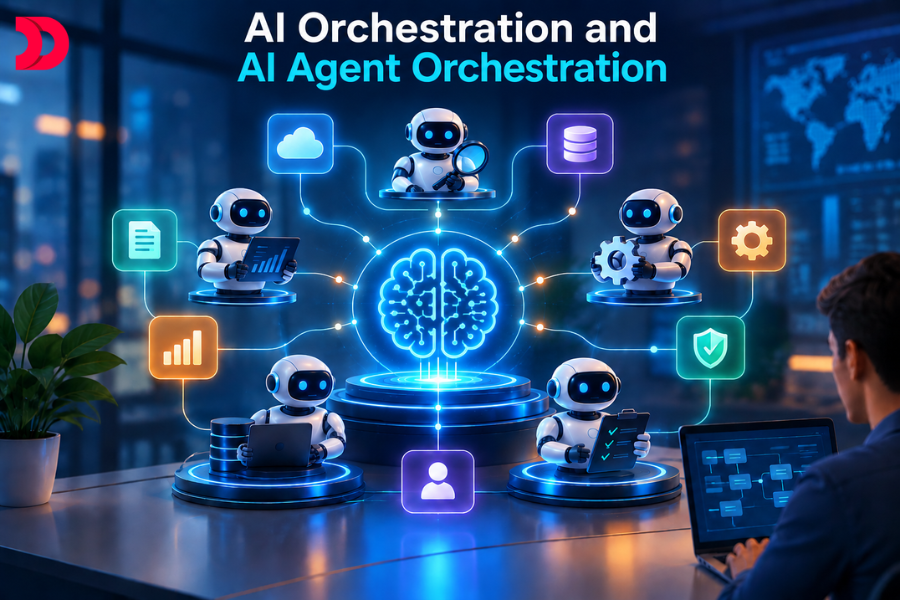
The software industry is now building AI-Native software from the ground up rather than using AI as an add-on feature. Before, software companies required a team of developers, designers, testers, and engineers to handle the entire software development lifecycle (SDLC). Today, AI is changing that by not only helping brands build faster, secure, and scalable software, but also changing what the software team will look like. Rather than simply using AI as an assistant, they are introducing AI Agents to support developers in entire development tasks. Do you also want to know what the software team will look like with the implementation of AI-Native Software development? Keep on reading! But first, let’s understand what AI-Native Software is.
What is AI-Native Software
AI-native software is software that is built on Artificial Intelligence (AI) from the very start rather than using AI as an add-on feature. Traditional apps require humans to operate, but AI-Native software is built around AI and can work faster, automate tasks, and make better decisions without human involvement. Instead of humans writing millions of lines of code by themselves, AI can generate code, test it, make decisions, and assist developers in the entire software development lifecycle, allowing teams to work smarter, faster, and more efficiently.
What will software teams look like in AI-Native Software Development?
Blurring of job roles
Why limit a team member to one specified role when AI allows teams to work across multiple roles? With the implementation of AI Development services, people are no longer limited to focusing on their traditional job role.
For example, developers can write code and also help with product design; a designer can create a prototype and also learn how coding works; a product manager can create a product plan and work with AI to design and improve the product. But what if one team member suddenly resigns? Who will complete their task? AI is filling the gap between traditional roles, allowing teams to work across roles more easily. So if a designer suddenly resigns, a QA engineer can use AI tools to create prototypes or improve UX.
From developer, reviewer to AI guides
The role of developers is evolving from writing all code by themselves to guiding AI agents to help them write code. While it’s still a developer’s job to build, design, test, fix, and maintain software, it can be done better with the help of AI automation.
Along with maintaining the software applications, engineers have to spend more time training AI tools to help them build, write code, test, find mistakes, and make decisions. Rather than working alone, developers can act as team leaders, run various AI agents for each task, and ensure each one works efficiently.
More than Prompts
Developers may think that knowing how to write AI prompts is enough to get the desired result. Knowing AI prompts is definitely a plus, but achieving your desired goals requires much more than simply writing prompts. Hire AI Developers at DevsTree who will first understand the project requirements and business goals, and help businesses build AI-native software that is scalable, secure, and aligned with their unique business goals.
The Hidden Risk of AI-Driven Productivity
While the implementation of AI does help teams improve their productivity, their workload also increases, which involves deciding how much control AI tools should have, which types of tasks AI can handle, where human intervention is required, and ensuring that AI tools are actually improving productivity, rather than just writing codes which later needs to be fixed by them.
AI agents can help developers complete day-to-day tasks like creating simple interfaces, working around unfamiliar technologies, and increasing teams’ productivity. However, in the end, the developer’s job is to review the work and approve it. If not checked by humans, AI may write incorrect code, which may be changed or replaced, wasting more time.
AI Shrinks Development Teams
AI automation can reduce the need for manual effort, as AI Agents can build software much faster than humans. For example, building a large software feature requires 15-20 developers, and building the same software using AI Agents may only take 5 to 7 developers. The thing is that before AI, it may have taken days/months to build feature-rich software with dozens of developers involved, but with AI automation, it reduces to a small team, and work can be completed within hours.
Traditionally, software teams work in a pattern where they first plan, then build, test, review, and release the software, which may take weeks. With AI, software teams can easily use AI Agents to work on their idea and requirements, build the software within hours/days, and move on to the next task.
AI-Generated Code Requires Careful Review
Even if AI writes code efficiently, it should be reviewed by humans. Yes, an AI Agent can complete the given tasks on time, but in the end it’s still a robot, and a robot can make mistakes too. Rather than blindly trusting AI, we recommend that software engineers keep an eye on each step of its process, such as testing the code generated by AI, checking whether it is working properly, whether it is creating any security problems, and whether it is generating the correct code.
Conclusion: The Future of AI-Native Software Teams
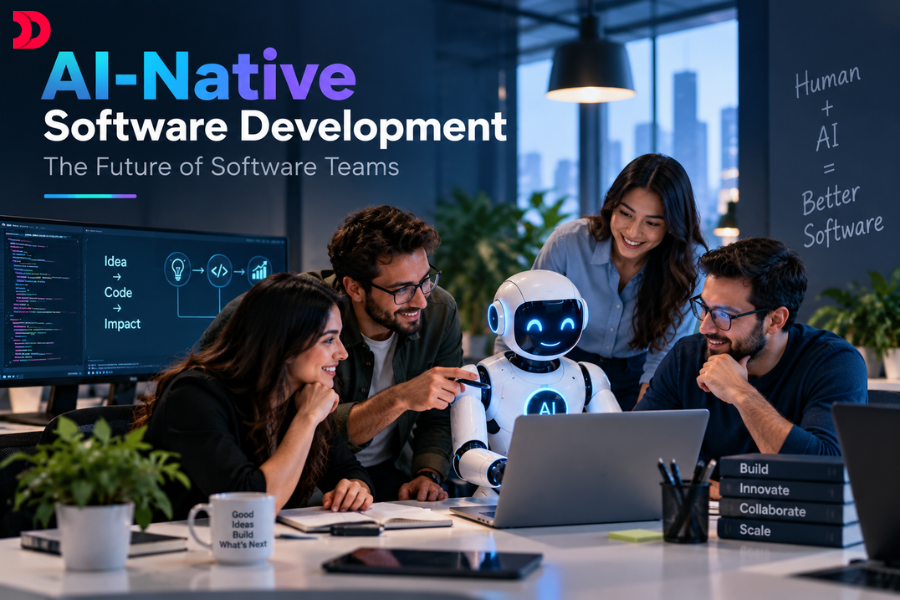
The evolution of AI-Native software has changed software teams in 2026. From hiring a 20-person team of developers to building feature-rich software to only hiring 5 to 7 developers backed by an AI Agent changes the team structure. AI-Native software helps the team understand and learn about other team members’ qualifications, enabling them to multitask effectively. Teams can easily train and instruct AI Agents, and inspecting each step of their work will ensure there are no mistakes. DevsTree’s AI Software Development Company helps businesses build AI-focused software faster, smarter, and more efficiently.












 Oct 13, 2026