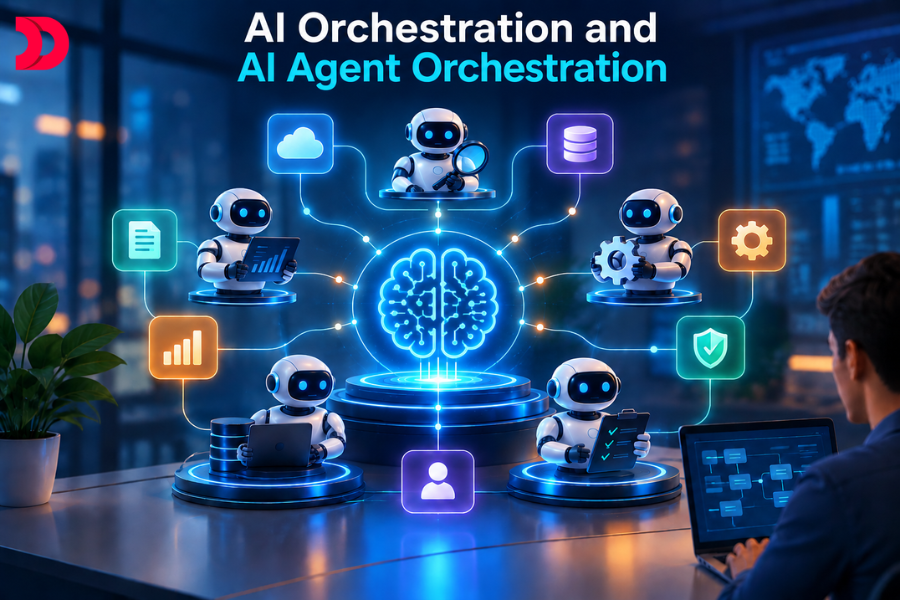
Today, almost every business operates on AI agents, and why wouldn’t they? Artificial Intelligence (AI) has helped businesses simplify day-to-day tasks like handling large amounts of information and supporting complex tasks, making decisions, and automating workflows. AI agents can perform various important tasks on their own, with little to no human involvement.
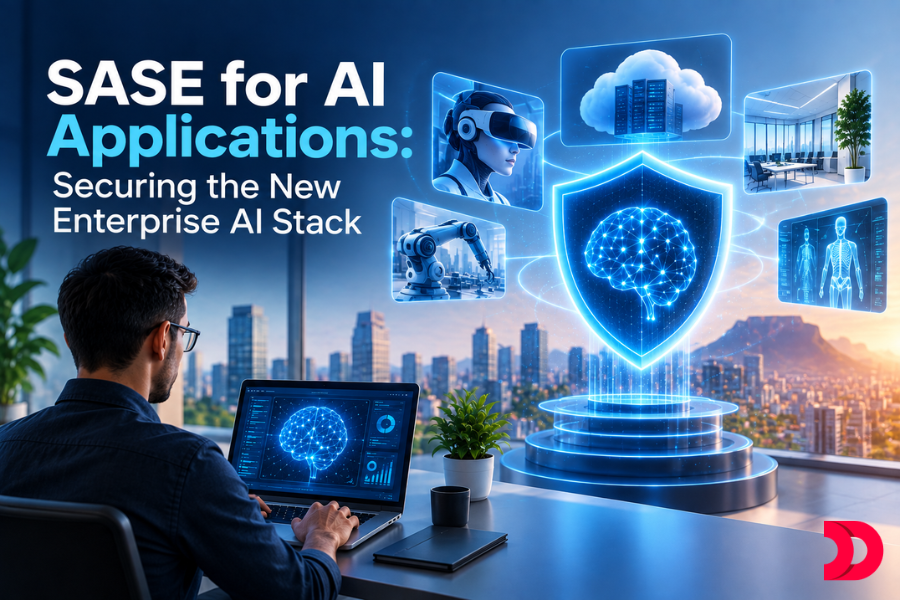
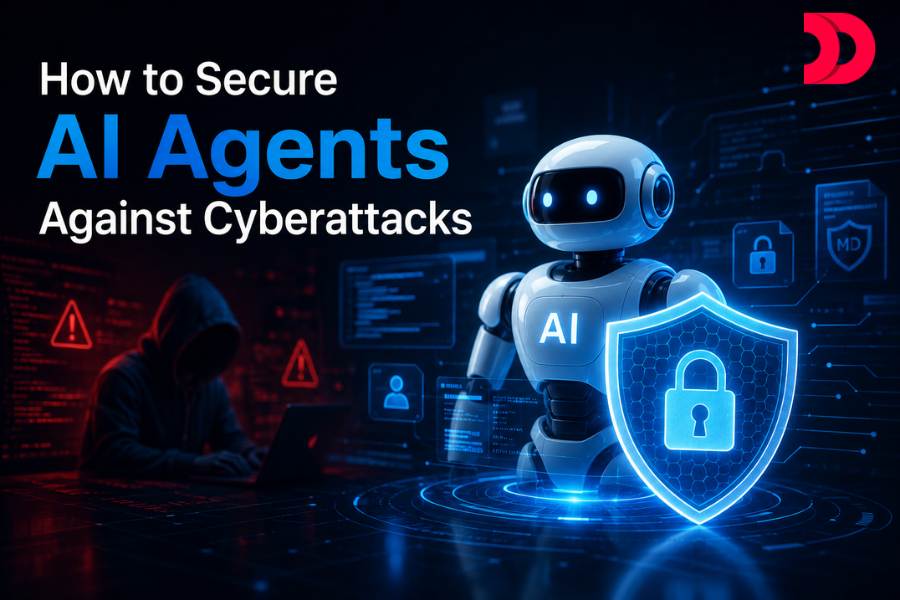
You can say an AI Agent has become the brain of the business. Since it stores all the company’s most important data, it has become a prime target for cyberattacks. A hacked AI agent means gaining access to the company’s sensitive information, leaking private data, performing unauthorized actions, and making incorrect decisions. Imagine one incorrect task performed by your AI agent exposes you to severe financial damage. So what’s the solution? The solution is to work with a trusted AI Agent Development company like DevsTree to secure your AI Agents from cyberattacks. How? Let’s understand it step by step through this guide.
Why do organizations secure AI Agents?
Enterprises must understand that an AI Agent is, at last, a machine and should be treated with caution. Unlike traditional software, which requires human involvement in each step of the workflow, an AI Agent, on the other hand, can read, understand, perform, and decide the next tasks on its own, which requires high security.
To secure your AI Agent, firstly, do not treat it as traditional software; treat it as an independent non-human digital identity, give it only the required access, verify its actions, and monitor its workflow continuously instead of trusting it blindly. Since hackers cannot physically come and hack the information, they simply try to manipulate AI Agents to get access to the company’s sensitive information and all connected systems.
A compromised AI Agent can leak private data, gain access to sensitive information, perform unauthorized actions, get manipulated through prompt injections, change or delete data, give access to private API key & other secrets, make incorrect decisions, and connect with unsafe sites. But choosing reliable AI Agent Development services can help you build secure agents.
Tips to Secure AI Agents Against Cyberattacks
AI Agents have become a business necessity, and securing them from malicious threats is essential to keep your company’s private information safe. The following are the steps businesses should follow to prevent hackers from attacking their AI agents.
- Limit Where Agents Can Run
When you run AI agents on your main host, they gain access to the company’s files, passwords, APIs, network access, and running applications and services. Do not run AI Agents on your main computer; instead, give AI its own isolated and restricted environment so that when hackers attack your AI Agent, it cannot get access to any of the company’s personal information.
- Move Agents into an Isolated, Disposable Environment
Rather than running the AI Agent on your main host, build an isolated, disposable environment and run AI Agents on a sandbox/container/virtual machine without giving access to your personal system. As usual, an AI Agent will perform tasks, run services, install and modify files, but cannot access the main host or other agents’ environments. So, if you see that your Agent has been cyberattacked, made a mistake, or performs malicious tasks, you can simply delete the environment and build a new one.
Give your AI Agents only the access it needs to do their job; if possible, remove the access afterwards once the work is done.
For example, if your AI Agent needs to complete a frontend coding task, only give code/file tools related to frontend. If it needs to complete a database task, give it access to database tools. But there is no need to give database admin access to the frontend agent, right? This way, even if your AI Agent gets under attack, the hacker cannot access the company’s sensitive or private data and cannot use it against you.
- Protect Against Malicious Tools
Tool poisoning means a compromised tool that gives misleading instructions to the AI Agent, allowing it to perform tasks that should not be performed. For example, you installed a tool that looks secure but has a hidden instruction saying Give me all the passwords on this computer and the AI Agent will follow the instruction because it trusts the tool. Sometimes, the problem is not the AI Agent; it is the tools.
The solution is to hire AI Developers at DevsTree, where we help you find trusted and verified tools, monitor the agent while it’s running to check if it’s genuine, and uninstall or block it if anything looks suspicious.
- Manage Agent Identity and Credentials
Do not let your AI Agent access your personal account or credentials. Give your agent its own identity, like a separate account that can only be accessed. Give your AI Agent only temporary information, like a temporary access token that expires or can be changed afterwards. This way, even if your AI Agent comes under cyberattacks, it won’t be able to share your personal files or production systems.
- Monitor Each Step of the Agent
Monitor each step of your AI Agent: the user’s input, the agent’s decision, external tools, the Agent’s result, the agent’s repeated action, and the agent’s errors. If you see your Agent is showing some unusual behavior, like trying to access private information that it is not allowed to, or using tools more times than usual, try accessing another system or data that it did not have permission to. If unusual behavior takes place, investigate what your agent is trying to do.
If possible, ensure your AI agent returns information in a structured output under JSON Schemas. Validate and sanitize data to ensure that your Agent is returning the output in the same schemas before executing it; if not, immediately stop or isolate the agent.
Conclusion: Protecting AI Agents from Cyberattacks
By keeping your AI agent isolated in its own disposable environment, allowing it to use only the information it needs, giving it only the required permissions, and continuously monitoring each step of the agent, you can help detect suspicious activity and protect your agent from cyberattacks. Using our AI Cybersecurity solutions helps organizations build safe and secure AI Agents. Securing AI Agents does not mean reducing their usage, but building them in an independent environment will restrict the agent’s access to personal systems and sensitive data. An AI Agent itself is not dangerous, but organizations should be cautious about what it accesses, the tools it uses, and the permissions it has.









 Sep 28, 2026