What is Clone App Development?
Clone app development refers to creating an application with similar features and functions to those found in an already successful, popular app. One might consider it “clone app development,” yet this variation has been tailored specifically for its niche or audience. Clone development can provide quick entry into an already-proven market by adopting an idea that has proven itself.
Benefits of Making a Clone App:
- Saves time and money: Clone apps are easier to make because developers can use code and features that are already there. This means that it costs less to make the app than if it were made from scratch.
- Proven Success: Businesses can benefit from market acceptance and user preferences that have already been proven by cloning great apps. It lowers the risk that comes with ideas that haven’t been tested yet.
- Quicker Time-to-Market: Since a lot of the work has already been done, clone apps can be released more quickly, letting companies take advantage of market trends and chances.
Disadvantages of Clone App Development:
- Not Being Unique: Clone apps don’t always have anything new to offer, which makes it hard to stand out in a crowded market. For users, they might look like copies instead of new strategies.
Limited Customization: The structure of clone apps may make it hard to make changes, which could make it harder to meet the needs of certain businesses
Advantages of Custom Mobile App Development:
- Unmatched Flexibility: Custom apps give businesses more freedom than any other type of app because they can add features and functions that are specific to their audience and industry.
- Brand Identity: Custom mobile app development lets businesses make apps that are true to their brand, giving users a consistent and enjoyable experience that fits with the general brand strategy.
- Scalability: Custom apps can be changed and added to as needed by the business or as the number of users increases. A reputable mobile app development business can make sure that the app can be expanded and will still work in the future.
Disadvantages of Custom Mobile App Development:
- Higher Initial Cost: Making a custom app from scratch usually costs more at the start than copying a current app. But the long-term gains might be greater than the short-term costs.
- Extended Development Time: making a custom mobile app takes longer because it includes making a one-of-a-kind solution that fits your needs. Compared to clone apps, this can make it take longer to get to market.
Cost and Factors Affecting Custom and Clone App Development
The complexity, features, design, and hourly rates of the development team are some of the factors that affect the cost of developing a mobile app. While custom mobile app production may require bigger initial investments for original development work done from scratch when contracting a specialized mobile app development business, clone apps typically incur lesser development expenses because existing code can often be repurposed.
Clone App vs. Custom Mobile App Development: What to Choose?
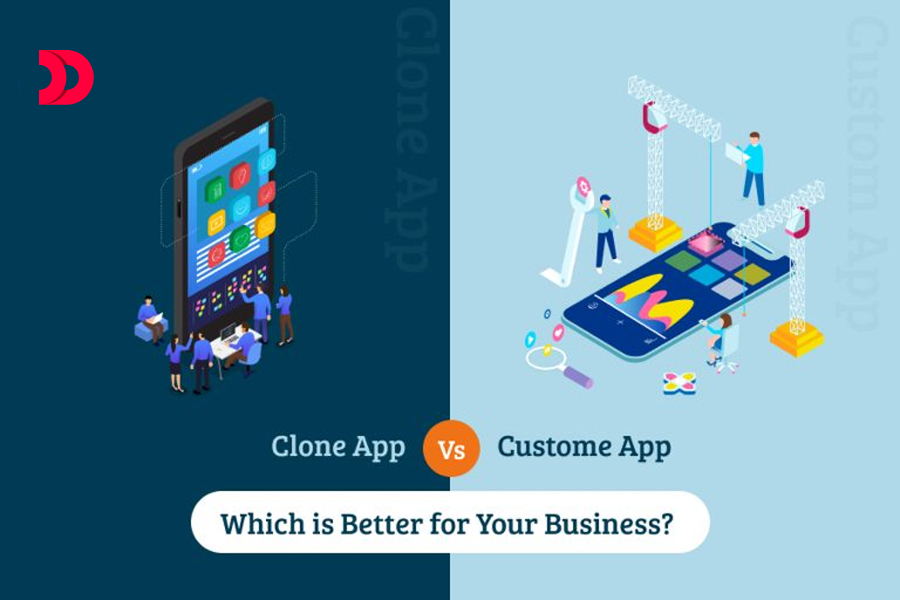
Deciding between clone and custom mobile app development depends on your business goals, budget, and how unique you want your app to be. Businesses seeking rapid market entry with proven concepts that are cost-cutting may opt for clone app development. Those prioritizing brand identity, unique features, and long-term scalability might favor custom mobile development by working with an established mobile app developer company.
Which is Better for Your Business?
In the constantly changing world of digital technology, mobile applications have emerged as essential resources for companies looking to grow and improve client interaction. Businesses frequently have to make the difficult choice of whether to invest in custom mobile app development or to use clone apps when thinking about app development. Each strategy addresses distinct business demands and goals and has a unique mix of benefits and drawbacks.
Final Thoughts
When considering mobile app development options for your business goals and target audience, one option could be better suited than another – consider your business goals, target audience and budget before making this important decision. Clone apps provide quick and cost-effective means of market entry while custom mobile app development gives greater freedom and individuality needed for long-term success. Businesses working with an experienced mobile app development company are better able to make choices which align with strategic vision and goals more closely than when working alone on development alone.












 Sep 08, 2026