As financial management becomes more digital and automated, demand for apps that help manage finances is on the rise. One such prominent player in this space is Dyme, which has set a precedent by offering innovative features with an intuitive user experience.
Are you enticed by Dyme’s rapid expansion and ready to cash in on its expanding app market for personal financial apps? According to Global News Wire, the financial management apps market currently stands at $1.7 billion, with estimates showing it could grow up to $2.2 billion by 2027.
Recent studies show a stunning 56% surge in downloads for the top 10 finance planning apps over the last five years, underscoring their incredible profitability and the immense return on investment associated with creating personal finance apps.
Under these changing conditions, knowing how to create personal finance apps such as Dyme can open up an array of opportunities, providing not only financial stability for users but also promising significant gains for developers.
This Blog will walk you through all of the necessary steps for starting this exciting journey of developing your own personal finance app.
Key Expectations Shaping Personal Finance App Experiences
Monitoring Bills and Expenditures
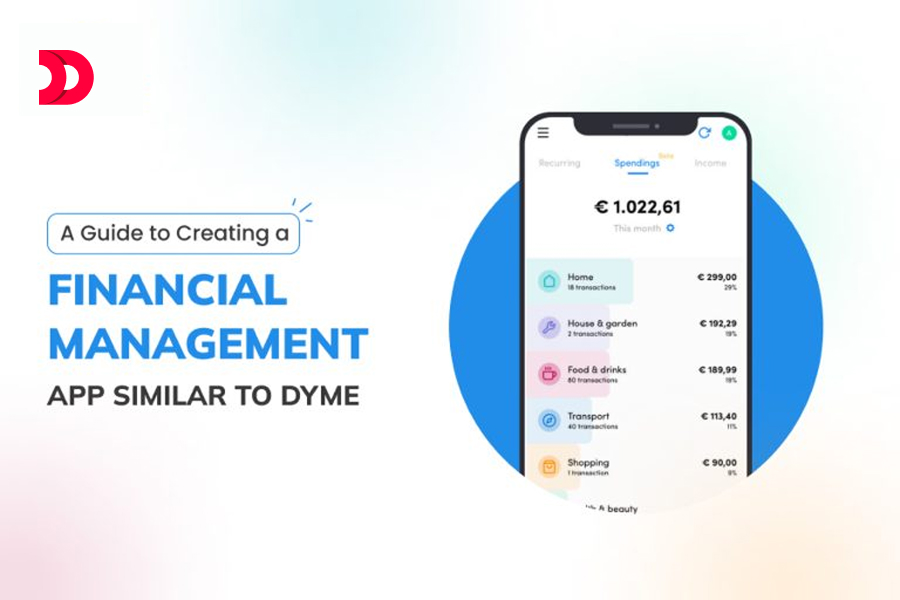
Keep track of your expenses and income quickly, either through manual input or via automated tracking. Combining both methods provides a perfect solution. The app seamlessly connects to payment and banking systems, providing a complete view of your financial data.
In spite of these integrations with digital technology, the ability to manually input transactions, particularly those that involve cash, is a great characteristic. Additionally, the cost classification feature is extremely useful, allowing users to classify expenses according to specific categories like entertainment, food, utility bills, and so on.
This categorization improves financial clarity, which allows users to see and manage their spending habits effectively.
Robust Security Measures and Adherence to Standards
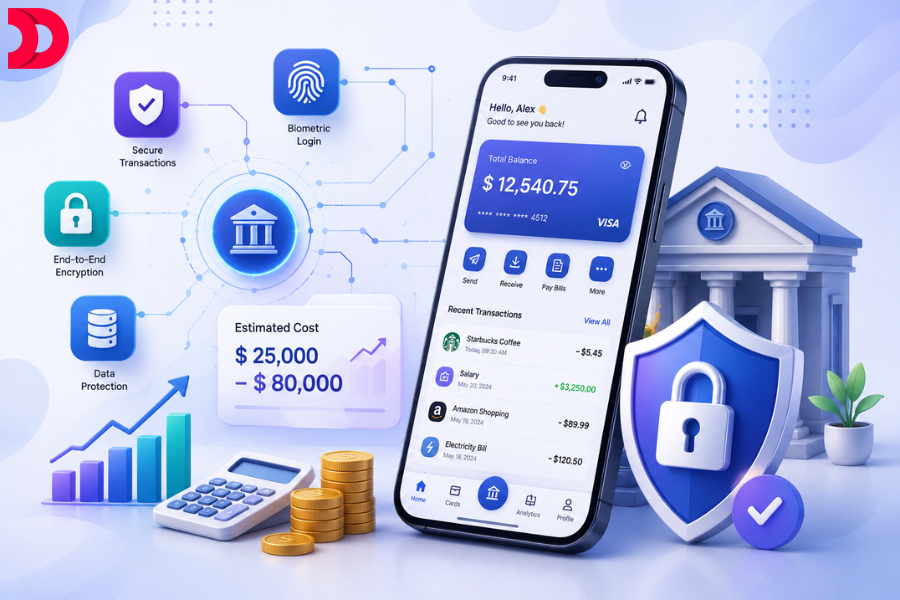
Secure information is an essential security concern for any application. It becomes more crucial when it comes to budgeting apps because it has direct access to the users’ accounts with financial information. An analysis of the public shows that they are the most concerned about losing control of their banking and financial data. Therefore, taking stringent security measures is crucial for any budgeting software. Security at a high level isn’t just an option, but it is essential to build trust among users and secure their financial information effectively.
Seamless integration Seamless Integration of Financial Institutions and Payment Systems
One of the major advantages of a budgeting application is the ability to seamlessly connect all accounts of users, combining and monitoring their finances in one place. To accomplish this, the application should be robustly compatible with a wide range of payment services and banks.
Wallet Management
The organization of individual financial accounts into different “wallets” constitutes a crucial aspect of budgeting effectively. This technique makes it easier to evaluate the level of financial capability over long time periods and reduces the chance of making impulsive purchases. For instance, you are able to set up several wallets, including:
Moneybox
Current Budget
Loan Payment
Free Cash
This segmentation allows users to manage and allocate their money with accuracy, which leads to better financial planning and management.
AI-Enhanced Financial Guidance
AI technology empowers our application to offer comprehensive financial coaching and guidance, empowering you to effectively manage spending and achieve financial goals more easily. In addition, AI enables automatic categorization of expenditures so users can gain a comprehensive view of all their spending habits across categories, not only enhancing the user personalization experience but also placing us in the top position on the market.
A Steps to Developing a Solution Similar to Dyme
Step 1: Research
Conduct thorough research on technology, market, and business research to discover the requirements of the users, choose an appropriate software development system (such as Flutter), and establish the app’s distinctive selling point along with a revenue-generating model.
Step 2: Strategize requirements
Highlight the essential features you need (e.g., cost tracking, subscription management) and look into sophisticated features (AI-driven insights or blockchain security) to make your app stand out on the market.
Step 3: Build Your Team
Find committed app designers such as UX/UI designers, Fintech experts, QA testers, and project managers. You should consider hiring a reliable firm for app development to have an experienced and complete team.
Step 4: Crafting and Coding
Join forces with your team members to develop user-friendly interfaces. Utilize Flutter to create responsive code and perform rigorous tests to ensure a smooth user experience.
If you follow these steps and use the experience of a specialised developer, you can bring your personal finance app to life with speed and top quality.
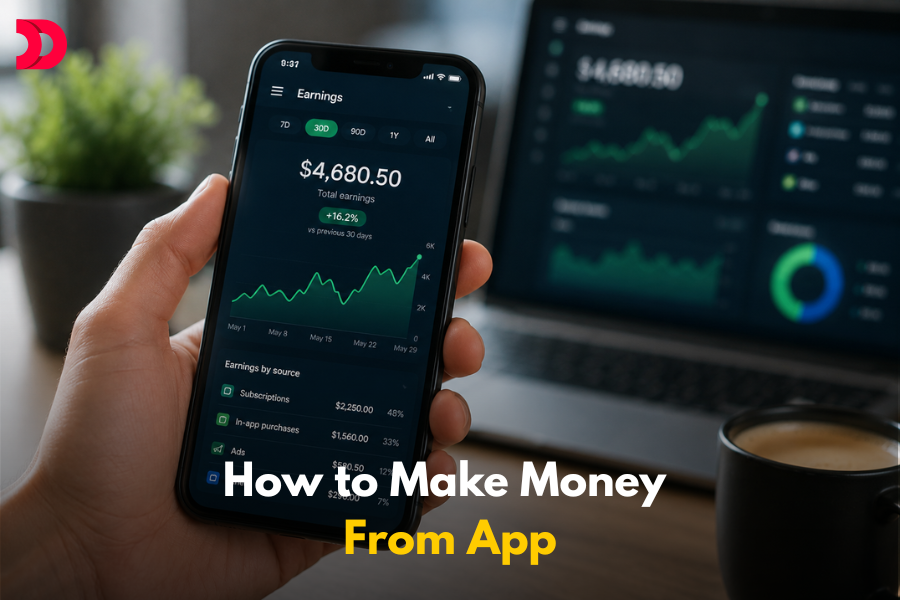
Monetize Strategy For Personal Finance App
The monetization of personal finance management apps requires a thoughtful strategy that is aligned with the user’s value and involvement. Here are the most effective ways to monetize your application:
Freemium Model:
Provide a free version of your app that has basic functions and offer an upgrade version that includes advanced features. Users can upgrade to get even more complete accounting and financial control.
Subscription Plans:
Set up subscription-based models, offering customers a variety of plans based on the number of services or features. The monthly or annual subscription fee could provide a steady stream of revenue.
Ad-Based Revenue:
Include non-intrusive ads within the application. Make sure that the advertisements are relevant to financial products or services and maintain user engagement without compromising the user experience.
Partnerships and Sponsorships:
Integrate relationships with businesses or financial institutions and earn money through sponsorships, for example, by offering to showcase specific products or services on your application as a payment for aid.
Estimating the Cost of Developing a Personal Finance App Like Dyme
In order to begin the process of developing an app for personal finance management, such as Dyme, employing committed app creators or joining forces with a mobile app development firm is crucial.
It’s crucial to comprehend the financial responsibility that goes into its creation. Based on an estimate of the development period of 2000–2000 hours, the price of creating a personal finance application is typically between $30,001 and $100,000, depending on important aspects.
You can hire app developers or a reputable mobile app development business and make sure that a committed and skilled team is dedicated to your venture and contributes to the effective and successful development of your personal finance application.
In the end, the process of developing a personal finance application like Dyme requires careful preparation, strategic thinking, and a deep comprehension of the needs of users. Through a thorough method of development paired with a focus on the user experience, creating an app for personal finance similar to Dyme offers exciting opportunities in the ever-changing world of technology for financial services.
As the market grows and customers seek out new ways to manage their finances, a financial application that is able to combine security, function, and a user-centric approach will surely make a difference in the current competitive market.












 Sep 08, 2026