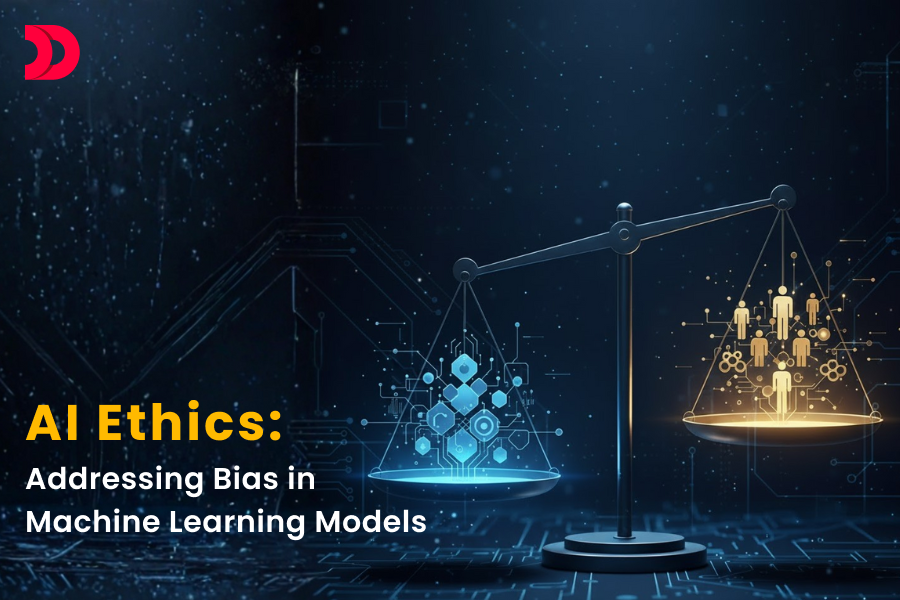
Artificial Intelligence (AI) and Machine Learning (ML) bring transformation in modern enterprises. These technologies make radical changes in traditional methods of offering personalized recommendations and handling risk assessment. AI strengthens the decision-making for companies, irrespective of their sectors. However, companies should address the bias and ethical implications-related concerns amidst the increasing prevalence of this technology.
AI, together with ML, offers immense potential with countless possibilities. However, it is essential to address complex ethical challenges in machine learning models related to bias and other issues to leverage their potential. Companies can address these challenges by consulting reputable service providers to hire ML engineers. This blog discusses the intensifying issue of bias in ML models with effective strategies to enhance transparency. Let’s start with the overview of bias.
Understanding Bias in ML Models
Let’s face it. Bias is an outcome of various discriminatory issues present in the data. This can be due to biases present in the data it learns from, or the way of making the AI model. In other words, it is a systemic issue that leads to unfair or discriminatory outcomes. This results in increasing societal inequalities. Let’s understand the types of biases in ML models.
We can segregate biases into three broad categories: data bias, algorithm bias, and human bias during the design or deployment. Historical data-based bias, sampling bias, measurement bias, and selection bias come under the data bias category. Algorithm or inductive bias comes during our choices made in feature engineering or objective functions. The biases of the developers or data scientists influence decisions throughout the AI lifecycle subtly. This is human bias.
Any type of bias can significantly impact our lives and working styles.
Impact of Biased AI
Biased AI or machine learning models lead to several far-reaching consequences. Biases bring discrimination and inequality. For example, such an ML model used in hiring can screen out qualified candidates, and loan application models can deny credit to deserving applicants. Moreover, biased AI has safety risks, and it affects the trust factor for companies. Using such biased models can damage trust for the organizations.
Therefore, it is crucial to identify biases in ML models and prevent them effectively.
How to Detect Bias in ML Models
Identifying bias is the first essential step towards its mitigation. It requires a proactive and systematic approach. Let’s go through some effective bias detective techniques-
Traditional accuracy metrics remain inefficient in detecting biases. Specialized fairness metrics like demographic parity, equal opportunity, calibration, and predictive equality can identify biases effectively.
It is crucial to inspect the training data for imbalances, missing values, and potential proxies for sensitive attributes before making ML models. Statistical tests can detect differences in feature distributions between different groups.
The model’s performance evaluation on specific subgroups within the data can give useful insights about biases. A model might achieve 95 percent overall accuracy, but it reduces to 70 percent for a minority group. This indicates significant bias.
The counterfactual testing is the alteration of a single sensitive attribute while keeping all other non-sensitive attributes constant. Here, ML experts observe whether the model’s prediction changes. If it changes, it strongly indicates the presence of direct bias.
It is better to consult a reputable AI and ML development company to detect bias in your company’s ML models thoroughly.
Transparency Techniques We Need to Know for Biases
However, merely detecting bias is not enough. It is also necessary to understand why an ML model is making certain unfair predictions. Transparency or interoperability can assist us in understanding the ML model’s biased behavior.
- Explainable AI (XAI) Methods
These techniques aim to make complex ML models more understandable to humans. LIME (Local Interpretable Model-agnostic-Explanations) technique explains individual predictions by estimating the complex model locally with a simpler model. It shows the most influential features for a specific decision. Another method is feature importance. It is useful for simpler models like linear regressions or tree-based models.
- Model Cards and Datasheets
Google has proposed a model card. It is a short document that provides critical information about the specific ML model. This information includes its intended use, training data, ethical considerations, and limitations. It enhances transparency and helps users understand the model’s proper context. Datasheets provide comprehensive documentation about a dataset’s origin, composition, and potential biases similar to model cards.
When appropriate, it is better to opt for simpler and more transparent models like linear regression or decision trees than complicated models. Complex models like deep neural networks, especially for high-stakes applications, are difficult to comprehend properly. It is essential to consider the interpretability and predictive power of ML models as per the application’s sensitivity.
Responsible AI and Ethical Practices
Responsible AI is the next level of technical debugging. It is essential to meet ethical considerations in every phase of the AI lifecycle in this digital era. Accountability is the key to responsible AI. However, organizations must establish robust governance structures to achieve it. The governance structure should include comprehensive AI ethics policies and internal guidelines.
Best practices for data collection, model development, deployment, and monitoring are crucial for ethical usage. Companies can hire ML engineers and other professionals to monitor every step before deploying the model into their business systems. The review boards, consisting of legal experts, ethicists, and representatives from various user groups, can also make a difference.
Another key factor is to nurture diverse and inclusive teams while developing AI models for mitigating bias. When your company does this, it is also necessary to consider the cultural shift and ongoing training. Finally, Responsible AI should be committed to sustainability through continuous monitoring and compliance. Companies should monitor overall performance and fairness metrics of ML models continuously to ensure the best ethical practices against biases.
Concluding Remarks
ML models have immense power and potential, but they should remain free from any bias or unfair practices. This makes addressing bias in machine learning models an ethical necessity. Transparency techniques and fairness metrics are useful for detecting bias. Finally, a Responsible AI framework can help companies leverage the transformative power of this revolutionary technology while maintaining ethical practices.
DevsTree IT Services is a renowned AI and ML development company that offers advanced solutions in web, mobile, automation, and data science domains. Contact us to hire ML engineers or developers from our company and get sophisticated ML models with exceptional performance.






 Dec 16, 2025