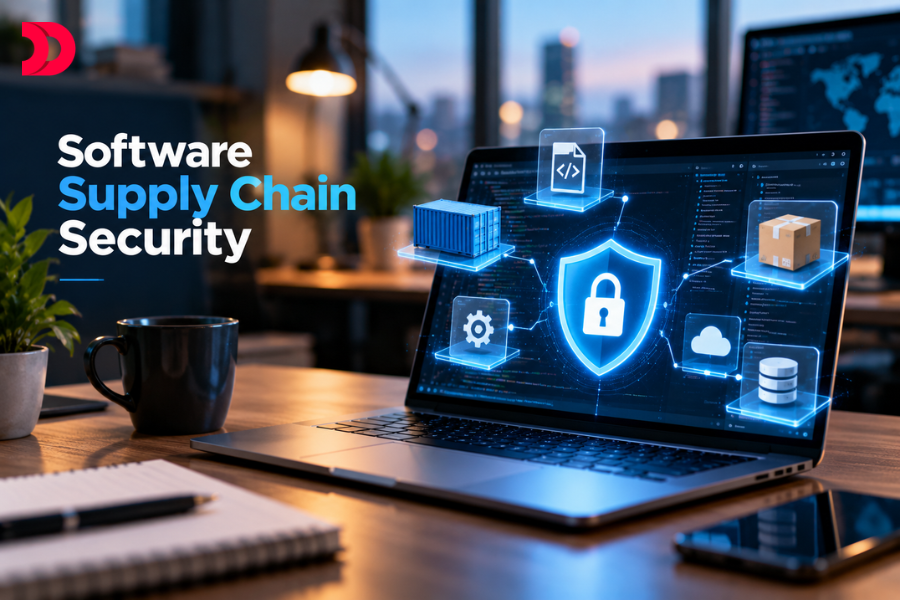
If you are a developer or an organization, have you ever thought about software supply chain security? Has your software ever been targeted by cyberattacks? If yes, then you might want to take some time to read this guide. Software Supply chain attacks have become common, as modern software is built on open-source libraries, third-party components, source code, people, and processes. Since third-party APIs, tools, and libraries are made by third parties, they may contain potential vulnerabilities, giving attackers a chance to infiltrate your software supply chain. Software supply chain security has become essential, as it involves everything from initial design to final launch. Even if one stage of the software supply chain becomes vulnerable, it opens the door for attackers to exploit the entire application. So, what’s the solution? Our goal is to follow some best practices to prevent software supply chain attacks. But first, let’s understand the risks.
Top 6 major software supply chain risks and Solutions
Malicious code Insertion is one of the most common risks, in which attackers inject harmful and unauthorized code into the software application at any part of the development process, which can lead to stealing data and damaging the system. Code manipulation can be done by using compromised third-party tools, using unsafe libraries, or directly hacking the developer’s system. To prevent this, developers should use secure third-party APIs and tools, store the source code in secure repositories, perform vulnerability scanning, and check the code before submitting it for final software.
- Open Source Vulnerabilities
Attackers are aware that developers use multiple open-source libraries and third-party packages to build software. So, they take advantage of this opportunity by targeting popular libraries so that when a developer tries to install dependencies, some malicious library gets installed, giving attackers a chance to exploit the software supply chain. Moreover, developers often do not know which versions of libraries are running in the background.
Outdated open-source libraries often contain security vulnerabilities (CVEs) that attackers can exploit to attack your system. To prevent this, developers should leverage an SBOM (Software Bill of Materials), a list of all the libraries, packages, and dependencies used in the application, and use automated tools like Software Composition Analysis (SCA) to check libraries for hidden risks and use updated versions of libraries.
Sometimes developers mistakenly store the company’s important data, like passwords, API keys, and access tokens, in the source code repositories. Even after deleting them, the secrets may still stay accessible. If attackers get hold of the secrets in the source code, they can use them to gain access to a system and its data. They even use automated tools to find exposed repository code and later use it to gain unauthorized access to important systems.
By storing your important secrets in a separate management tool, avoiding storing sensitive passwords directly into the source code, removing or changing secrets regularly, and using automated tools for vulnerability scanning, you can detect accidentally exposed credentials and prevent cyberattacks.
- Third-Party Software Risks
Attackers know that developers use various third-party packages to build the software faster, which can also be one of the reasons for cyberattacks. Yes, attackers often try to compromise third-party libraries and packages by injecting malicious code. So, when developers try to use the packages, attackers can easily gain access to the system through the harmful code they inserted. To prevent this, developers should use secure third-party libraries, keep a list of all third-party tools used in the software, and regularly monitor the software after using third-party packages.
- Unsafe Development Environments
Attackers usually try to find an insecure development environment so that they can easily inject harmful code into the software environment to gain access to a company’s sensitive information and data. Developers should not use compromised computers, networks, or tools that can allow attackers to infiltrate the software environment. Instead, they should try to reduce the risk of infiltration by using strong passwords, keeping the software updated and patched, and following secure coding practices to help keep the development environment secure from any cyberattacks.
- Internal Security Threats
If possible, give your employees only the required permissions that they need. Sometimes the intruder can be someone from your employees or users. Giving them your software’s sensitive passwords or credentials can make your entire development lifecycle vulnerable to cyberattacks.
To prevent this, ensure you always change important passwords, keys, and access tokens; do not give your employees access that they do not need; and monitor any unusual activity across the software environment, such as malicious users trying to gain access to any system they do not have permission for. If you find any suspicious activity around the software environment, immediately remove the user’s access and try to prevent it from happening again.
Best practices for software supply chain security
- Leverage Software Bill of Materials (SBOM)
Software Bill of Materials, as its name suggests, is a list of all the materials; in this case, it is a computer-readable list of components used to build the software, such as open-source software, third-party libraries, and dependencies. Developers can use an SBOM to keep track of all the tools, libraries, and packages used to create software, so they can easily identify what is inside the software, which components are vulnerable to attacks, or which ones were attacked, and replace or fix them.
- Automate Security Checks and Collaborate with DevOps
Implementing security tools like static application security testing (SAST) and dynamic application security testing (DAST) in the CI/CD pipeline can help identify security vulnerabilities before they reach the final launch. Moreover, these security tools should be used regularly to find vulnerabilities, unsafe coding practices, and misconfigurations, and to fix them as soon as possible. Furthermore, the security team should partner with the DevOps team and take on a DevSecOps approach to automate security checks throughout the software development lifecycle. The security team should also connect with developers to ensure secure coding practices.
- Apply Zero-Trust Security to CI/CD
Your CI/CD pipeline security is very important. To protect it from cyberattacks, one can follow these practices: Only give the required access needed to perform the tasks; check every employee, device, and software component before giving them access to the CI/CD pipeline; change passwords, API Keys, and token access regularly; store the CI/CD pipeline in a different build system so that if one gets hacked, it will not affect others; and apply multi-factor authentication setup so that only authorized user/system can gain access to the CI/CD build system.
- Check Dependencies for Security Risks
Always check your dependencies, like libraries, packages, and other software tools you use to build your software. Use SCA tools to check for security vulnerabilities. Developers should continuously check dependencies and do security checks every time they use new dependencies. This is also one of the easiest ways for attackers to infiltrate a software supply chain.
- Check third-party software vendors
Before buying software from third-party vendors for your company, one should keep certain points in mind, such as whether the vendor follows security practices, checks its security certifications, fixes security problems immediately if needed, reviews its past history of handling security vulnerabilities, and asks vendors to follow the security practices if they don’t; this way, an organization can easily protect its software and system from software supply chain risks.
- Develop an Incident Response Plan
Coordinate with your security team and employees and create a proper IRP plan on what precautions to take if cyberattacks take place. Partner with the security team and employees and help them learn best practices, like how to detect if their system has been attacked, how to detect and prevent it from happening again, how to recover the system if it’s under attack, allow them to learn new practices every time new threats appear, and tell them to regularly follow these practices so they will know what to do.
- Protect and Update Credentials
Try to keep important passwords, access tokens, and API keys in a secure management tool and not in the source code. Creating a temporary access token that can be deleted is better than creating a permanent password that can be easily exposed. Also, if the secret password or credentials get exposed, try to replace them immediately with different ones.
- Monitor Software Activity
Keep close track of your software activity. Watch who is trying to access the software, check if the software or employees are showing any unusual activity, use scanning tools to find if any malicious code was injected by the attacker before it goes into production, prevent malicious activity while software is running, and lastly keep a track record of any threats that occur, which can help to catch attackers during investigation.
- Build a strong security culture
Train employees and developers with a strong security culture. Tell them to stay away from unsafe or risky software dependencies, be aware of phishing emails, monitor if anyone is trying to make a fake login attempt, look for unusual or suspicious activity, and immediately report if any suspicious activity takes place around the software environment. All of these precautions can help detect threats before they cause any damage to the software.
- Follow Regulatory Security Requirements
Last but not least, make sure to follow NIST SP 800-218 guidelines while developing a software application. Show customers a signed record (provenance) and SBOM (Software Bill of Materials) that lists how many and which components are used to build the software. Moreover, organizations can also use supply chain compliance software that will automatically tell customers which components/libraries are used or whether the company has followed the regulatory security requirements while building the software.
Securing Your Software Supply Chain with DevsTree
If you are stuck on how to secure your software from cyberattacks, then you need a platform like DevsTree that constantly tracks each of your company’s assets for new changes or risks. We are a trusted IT services and technology firm that helps businesses detect, understand, and fix software supply chain risks easily. How do we do it?
- We track all of the company’s assets that are accessible on the internet, like its websites and apps, IP addresses, cloud services, security certificates, on-premises systems, and domains, to find any suspicious activity around them.
- Then we test all the company’s assets we find using security tools to detect any security vulnerabilities.
- We believe that not every asset can easily be exploited, so we categorize each asset by looking at factors such as how easy it is to exploit, how important it is to the business, how easy it is to find by attackers, how difficult they are to fix, and which assets can be targeted by attackers. This way, we can fix the highest-risk assets first and then later focus on reducing the company’s overall security risks.
- Lastly, if we find any vulnerabilities in any of the assets, we will give our customers evidence with proof of where the problem is, how serious it is, who owns the affected asset, and how to fix it properly.
Key Takeaways
Remember, maintaining software supply chain security is essential throughout the entire development lifecycle and not just in one stage. We also recommend that companies stay up to date on the latest security threats so they can address security risks as early as possible. Protecting your software application from cyberattacks is hard but not impossible. By following some best practices, such as using SBOMs, leveraging secure dependencies and libraries, automated scanning for vulnerabilities, using CI/CD pipeline security, tracking software activity, following regulatory security requirements, and, most importantly, training employees to look out for any suspicious activities to avoid potential cyberattacks and security breaches.











 Oct 01, 2026