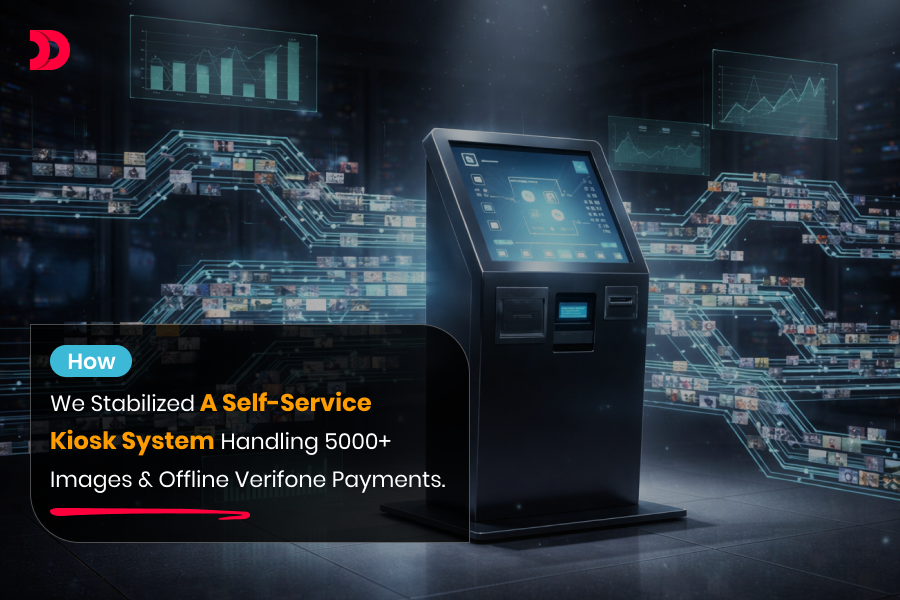
When you build software for kiosks, you’re not building another web app – you’re building a machine that must survive low memory, unreliable network, offline transactions, and real-time customer usage without ever crashing.
This is the story of how we diagnosed and fixed two deeply complex performance problems in a food-ordering kiosk system built with Angular 12, .NET, Node.js Development and Verifone – running on a Samsung Tizen OS device with just 4GB RAM.
And yes – the kiosk kept taking orders even without the internet. That was both the feature… and the monster we had to tame.
The Kiosk – At a Glance
This wasn’t just a touchscreen menu.
It was a full standalone ordering machine:
Customers browse menu → place order → pay
Works online and offline
Payments routed through Verifone terminal
Syncs menu data & offline transactions regularly
Prints receipts, pushes orders to POS & Kitchen Display
Component
Tech
Frontend
Angular 12
Backend
.NET + Node.js
Local DB
SQLite (Web SQL)
Device
Samsung Kiosk • Tizen OS (4GB RAM)
Payment Terminal
Verifone (No Web SDK/NPM for Angular)
This means everything – UI, sync engine, printing, payments – shares limited CPU, memory, and a single communication channel to Verifone.
So when something goes wrong, everything breaks.
The Two Problems That Almost Killed Performance
1. Menu Sync: Thousands of Images = Memory Explosion
The kiosk regularly downloaded and updated menu content, including:
1,000 to 5,000+ images per outlet
High resolution required for display
Sync triggered frequently based on configuration
The original implementation subscribed to events for each downloaded image…
1000 images → 1000 active event 5000 images → 5000 events waiting in memory
The result?
Memory consumption spiked
UI began lagging
Printer froze mid-operation
Kiosk eventually required manual restart
Not ideal when customers are mid-order.
How We Fixed It
We changed the sync pipeline to:
Download image
Process
Immediately destroy events
No stack buildup. No memory leak. Simple but game-changing.
Final output rate: 2–3 images per second
UI stayed smooth, printer remained responsive
Memory consumption stabilized drastically
2. Offline Sync + Live Payments = Node Crash
The System Supported Offline Payments – Great. But when the internet returned, the Kiosk synced them to the backend – Also great.
EXCEPT when sync & live payment happened simultaneously.
Here’s the trap:
Browser cannot talk directly to Verifone (CORS + PCI restriction)
So Angular → Node → Verifone socket is the only path
Verifone allows one command at a time
Node was stuck at v4 – no chance of upgrading
No official SDK or NPM to optimize communication
So the moment:
Offline sync fetching old transactions AND Customer tries to make a live payment
Both fight for same socket
Node module crashes
Kiosk freezes
Printing stops
No orders continue
A total service breakdown.
Root Cause + Permanent Fix
Instead of parallel execution, we serialized Verifone communication:
Operation
Frequency
Terminal health check
Every 7 mins
Offline transaction sync
Every 30 mins
The key rule: Never let syncing and payment run at the same time.
And it worked.
No more socket clashes
No Node crashes
Payments & sync both stable
No kiosk downtime during rush hours
What This Taught Us
Engineering for kiosks is a different battlefield.
You don’t get infinite memory. You don’t get the luxury of retries. You don’t get to deploy patch updates easily.
Every solution must be efficient, resilient, and edge-case proof.
This project pushed us to dig beyond surface bugs and understand:
Memory lifecycles
Hardware limitations
Offline queuing
Device communication constraints
Verifone single-socket behavior
The stability we achieved wasn’t from rewriting the system – but from understanding it deeply and reducing friction at the core.
When a single Kubernetes cluster no longer meets your business requirements, you might need to opt for Multi-cluster Kubernetes, multiple independent clusters. Mostly, a single Kubernetes cluster is enough to deploy, scale, and manage modern applications. However, as the company...
I am sure you heard about AI and generative AI, but have you ever heard of Shadow AI? Since the growing popularity of ChatGPT and other AI tools, more people are becoming aware of Shadow AI. So what exactly is...
Sales pipelines expand, and hiring cycles accelerate- all these indicators highlight a hyper-growth phase of your enterprise. It is, however, necessary to consider that every operational element stretches to its limit in this phase. One such aspect is information technology...
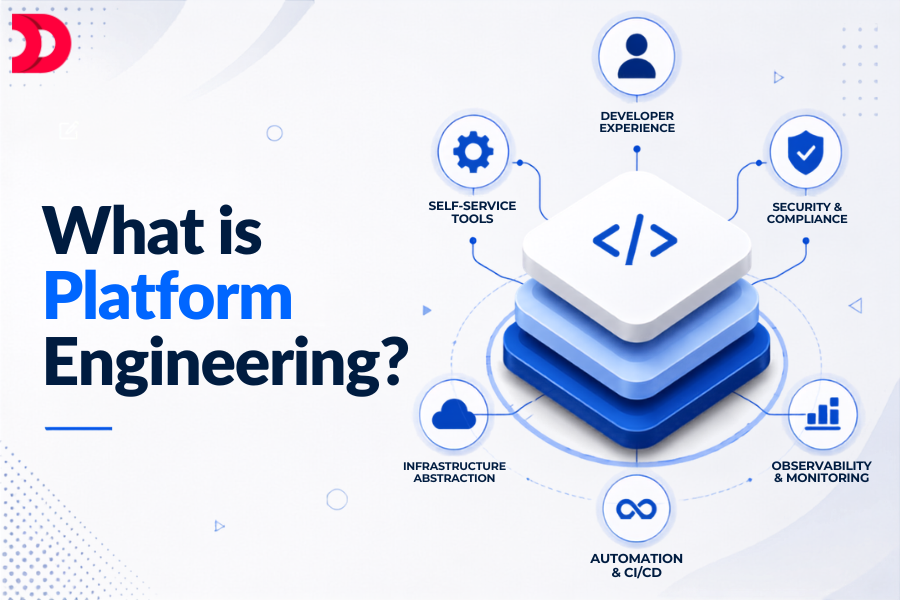
Platform engineering is an emerging discipline in software development. It can make the developer experience (DevEx) better and help them deliver products quickly. The platform engineering’s focus stays on building automated, self-service internal developer platforms (IDPs). Platform engineering teams build...
Digital Twin Technology is a digital representation of a physical object, process, system, or environment that continuously receives real time data from sensors, IoT devices, software, and connected systems. Unlike a static 3D model or simulation, a digital twin evolves...
Top Reasons Companies Are Moving to Hybrid Cloud Solutions On-premise or private cloud and public cloud approaches have made the entrepreneur’s life easy. In this competitive business scenario, however, it is not enough to implement a single concept. The world’s...










 Oct 01, 2026