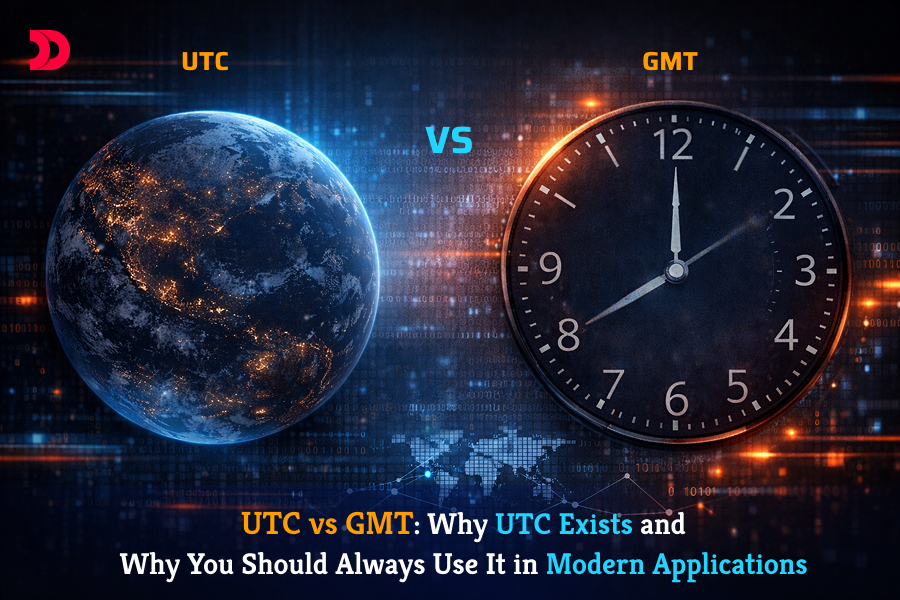
Time zones may look simple on the surface, but any developer who has dealt with cron jobs, database timestamps, or cross-country scheduling knows how quickly things break. One of the biggest areas of confusion is the difference between UTC and GMT-two values that look identical (both are +00:00) but behave very differently under the hood.
In this blog, we will explore why UTC was introduced even though GMT already existed, and how choosing the wrong time zone can create real-world issues-such as email schedules firing at the wrong hour.
Why Was UTC Introduced Even Though GMT Already Existed?
GMT has been around since the 19th century and served as the world’s reference time. But as global communication, computing, and atomic precision grew, GMT started showing serious limitations.
1. GMT is Based on the Earth’s Rotation (Not Exact)
GMT is tied to the rotation of the Earth – a rotation that is not perfectly stable.
The Earth slows down and speeds up by milliseconds due to:
gravitational forces
earthquakes
atmospheric changes
ocean tides
This makes GMT imprecise, especially for scientific and digital applications that depend on microsecond accuracy.
2. UTC is Based on Atomic Clocks (Extremely Precise)
UTC was introduced in 1963 to provide a scientifically exact time standard.
UTC:
uses atomic clocks
adds leap seconds to stay aligned with Earth
is maintained by global standards organizations
is consistent for computers, satellites, and digital systems
In short, UTC is stable, scientific, and predictable. GMT is not.
3. GMT is a Time Zone, UTC is a Standard
GMT behaves like a time zone. UTC is a global reference point.
Feature
UTC
GMT
Accuracy
Atomic-level
Earth rotation (variable)
Type
Time Standard
Time Zone
DST
No
No (but UK switches to BST)
Focus
Digital systems, APIs, servers
Civil & historical time
4. GMT Does Not Support Modern Daylight Saving Time Rules
The biggest technical issue:
GMT does not support DST or seasonal shifts. It is a fixed +00:00 offset.
However, many regions that historically used GMT (such as the UK) now follow:
GMT in winter
BST (GMT+1) in summer
This means GMT is no longer adequate for modern computing where DST shifts matter.
Real-World Example: The Email Scheduling Bug Caused by Wrong Time Zone
One of the clearest demonstrations of why UTC is preferred comes from a real client-facing issue many developers encounter.
The Problem
A client had scheduled email notifications according to EST (Eastern Standard Time).
However:
EST does NOT include Daylight Saving Time
When DST started in the USA, EST stayed at UTC-5
But the client expected the system to follow local New York time, which becomes EDT (UTC-4) during DST
This caused:
Emails being sent 1 hour late or 1 hour early
Major confusion for users
Missed notifications during a product launch
Why It Happened
Because the developer selected:
EST
EST is a fixed offset with no DST handling.
America/New_York, on the other hand:
Properly supports DST transitions
Automatically switches between EST and EDT
Matches what users expect
The Fix
Switch the timezone to:
America/New_York
OR run all cron jobs in UTC, then convert to user time zone only when displaying.
After switching, the cron job fired correctly both during:
Standard Time
Daylight Saving Time
The Lesson: Always Use UTC Internally
Here’s what this incident teaches:
Use UTC for:
servers
cron jobs
logs
databases
API communication
Convert to user time only at the presentation/scheduling layer
Never rely on:
GMT
EST / PST / IST (fixed-offset zones)
Windows names like “GMT Standard Time”
If you handle DST manually, you will eventually break something.
Conclusion
GMT may have historical value, but modern computing demands accuracy and predictability. That’s why UTC was created, and why every modern backend, cloud platform, and distributed system relies on it.
If your application deals with:
scheduling
cron jobs
email triggers
time-based automation
international users
then UTC is not optional-it is the only safe and reliable standard. If you’re building scheduling-heavy systems, working with a reliable web application development company ensures your product stays accurate across time zones and DST changes.
When you build software for kiosks, you’re not building another web app - you’re building a machine that must survive low memory, unreliable network, offline transactions, and real-time customer usage without ever crashing. This is the story of how we...
The healthcare sector covers a significant portion of the global economy, especially in the post-pandemic age. However, an aging global population, the prevalence of chronic diseases, and a persistent shortage of qualified professionals create hurdles for this sector. Moreover, the...
Data is the greatest asset and the most significant vulnerability in this AI-driven age. As financial institutions switch to hyper-digital ecosystems, the risk related to privacy and data security has increased exponentially. Traditional rule-based systems are insufficient in preventing sophisticated...
The Internet of Things (IoT) has become a new norm in the modern industrial landscape. Globally, enterprises have adopted it to drive digital transformation and implement the Industry 4.0 revolution. However, such penetration of the IoT technology from smart factories...
Algorithm is everything when it comes to measuring the effectiveness of AI models and the success of AI-based startups. Large Language Models (LLMs) and specialized edge AI are gaining fame quickly as enterprises want scalable solutions for handling multiple tasks....
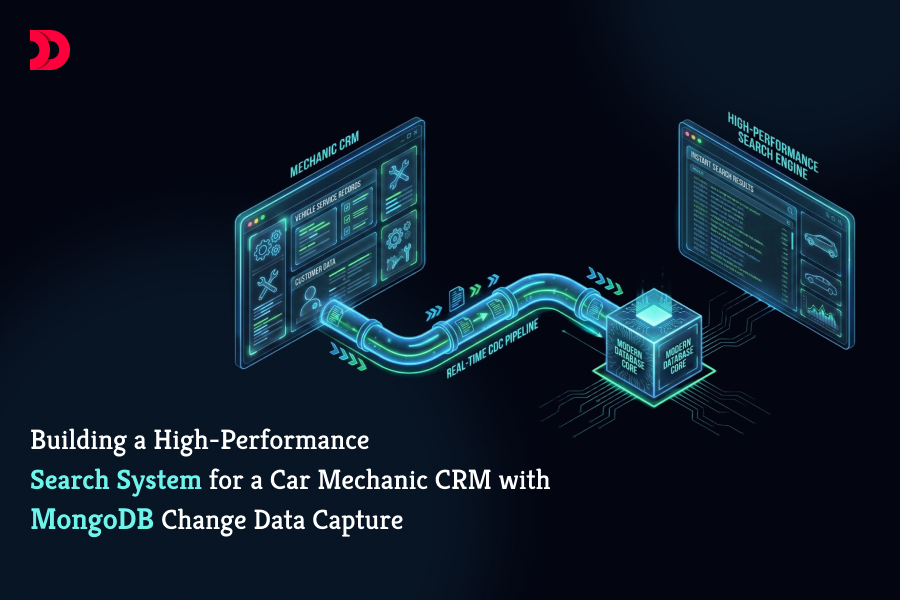
The Problem In our car mechanic CRM application, users needed to search across multiple entities simultaneously-customers, their vehicles, appointment history, and service records. However, our data architecture presented a significant challenge. The Data Architecture Challenge Our application followed database normalization...












 Feb 10, 2026