We all know the fact that enterprise AI adoption is moving faster than ever, but still, most companies, including us, are struggling to make their systems truly intelligent.
The advanced tools such as the chatbots, automation bots, and internal APIs have become day-to-day tools, but they still operate in silos. Each department builds its own workflows, often disconnected from the rest of the organization.
This is where the Model Context Protocol (MCP) is quietly reshaping how enterprises adopt and scale AI.
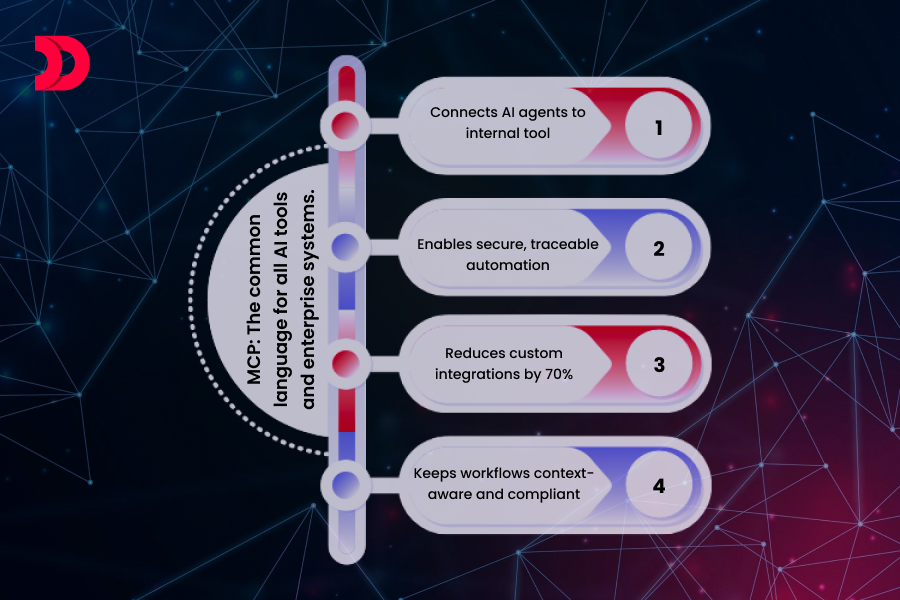
Instead of managing hundreds of custom integrations, MCP allows systems, tools, and agents to communicate using one consistent standard.
In this blog, I am going to share how MCP fits into enterprise AI workflows, the real use cases it powers today, and what the future looks like as it becomes the new middleware for AI-driven organizations.
TL;DR: How MCP is Transforming Enterprise Workflows
Firstly, MCP acts as the intelligent backbone for enterprise AI.
Secondly, it connects multiple tools, systems, and agents through a shared communication protocol, allowing seamless data flow and task execution.
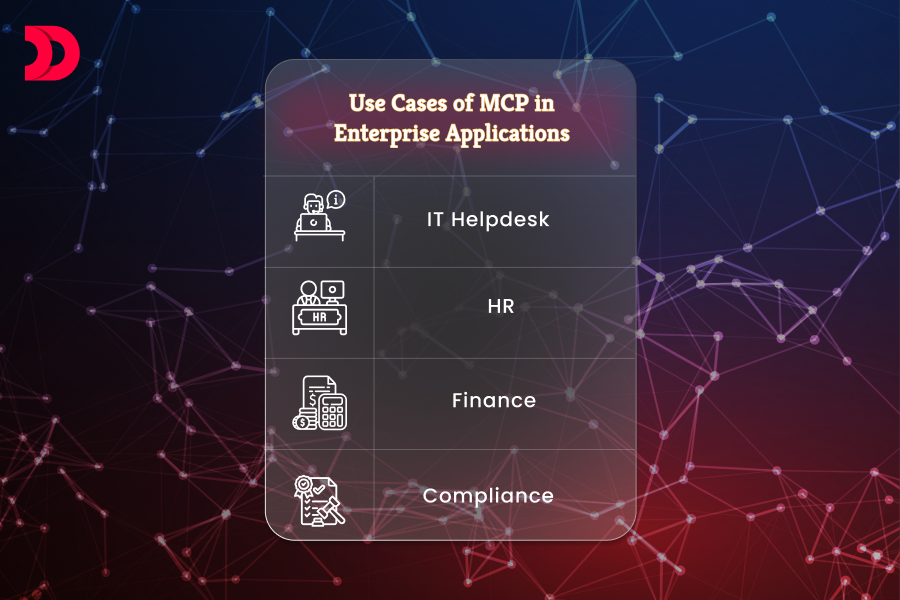
Last but not least: from HR onboarding and IT helpdesk to finance and compliance, MCP is already improving automation reliability and reducing integration complexity for early adopters (which is the best).
The Role of MCP in the Enterprise AI Story (Quick Summary)
Every enterprise has several layers of software, CRMs, ERPs, HR systems, compliance tools, and custom databases. Each of these systems has its own APIs, connectors, and data formats. When teams try to bring AI into these environments, they quickly realize the cost of inconsistency.
MCP solves this by acting as the communication layer that connects every AI agent or automation with enterprise systems. It makes workflows consistent, context-aware, and easy to extend.
In simple terms, MCP ensures that your AI systems not only talk to your tools but also understand them.
See How Enterprises Are Using MCP Today
Get access to real use cases and MCP-ready workflows designed for enterprise integration.
Use Case 1: Knowledge Base Search and Tool Execution (Internal IT Helpdesk)
Every enterprise employee interacts with IT systems daily. Password resets, access requests, and troubleshooting tickets take up significant time and support resources.
Before MCP:
Each task depends on separate automation. Knowledge search runs on one API, execution scripts on another, and confirmation messages through yet another service. These workflows often break when systems update or data formats change.
With MCP:
Let’s understand the difference after moving ahead with the MCP.
An AI helpdesk agent receives a query such as “reset my VPN password.”
It searches the internal knowledge base for the right article.
It triggers the reset tool through the MCP server.
The action, response, and log are all handled within the same protocol.
This approach keeps the workflow consistent, traceable, and easy to maintain. IT teams no longer manage multiple connectors or worry about version conflicts.
Ready to Automate Internal IT with MCP?
Build helpdesk systems that resolve issues faster and integrate cleanly with your enterprise tools.
Use Case 2: Automated Business Process Workflows (HR Onboarding and Finance Reporting)
Enterprises rely on repeatable workflows across HR, payroll, and finance operations. The challenge is that each of these functions runs on separate software.
HR Onboarding Example:
When a new hire is added to the HR system, an MCP-triggered workflow begins.
The AI agent creates user credentials, sends device setup requests, and triggers welcome emails.
Each step uses different tools, but MCP ensures all communication remains unified and trackable.
Finance Reporting Example:
The finance agent gathers data from accounting tools and spreadsheets.
MCP standardizes data retrieval from different systems.
The AI agent generates and sends reports directly to the leadership dashboard.
This consistency removes manual dependency and ensures business processes keep running smoothly, even as tools evolve.
Let Us Simplify Enterprise Workflows for You
Reduce integration effort and kickstart the automation with MCP.
Use Case 3: Compliance Workflows (Audit Logging and Healthcare Claims)
Let us understand the final use case of the blog. Well, to start with, in the regulated industries, automation without traceability is not acceptable/applicable. It is definitely the MCP that makes compliance automation transparent and reliable.
Understand the Audit Logging Example
Each interaction or task executed through MCP automatically generates structured logs. Every request and response is recorded, making audit trails easier to manage and verify.
Sharing the Healthcare Claims Example
In healthcare, claim approvals involve data from multiple systems. It includes the hospital management, insurance, and billing. Here the MCP ensures all these systems exchange information securely and consistently while maintaining compliance with healthcare regulations.
What is the Result?
Fewer errors, faster claims, and simplified compliance audits: what else does any industry or enterprise wants?
Make Compliance Simpler with MCP
Strengthen your automation stack with built-in transparency and auditability.
Several forward-thinking enterprises have already started building their internal automation layers on MCP.
Example 1:
A global fintech company connected its CRM, analytics, and customer onboarding tools via MCP. Integration time dropped by 60 percent, and new product rollouts became faster.
Example 2:
A healthcare provider integrated its scheduling and claims system through MCP. This reduced claim processing errors by 40 percent and improved patient data consistency.
Example 3:
An enterprise HR team used MCP to unify candidate information across its ATS, HRMS, and email automation tools. The result was a 3x faster onboarding process with reduced human intervention.
These examples show that MCP is not theoretical; it is already operational and driving measurable outcomes.
Future Outlook: MCP as Standard Middleware for AI-Driven Enterprises
Enterprise systems once relied on REST APIs the way networks relied on early protocols before the internet standardized.
Today, MCP is doing the same for AI.
In the next few years, we will see MCP evolve into the standard middleware layer that connects every enterprise AI agent, workflow, and business tool. In short, it will enable true interoperability, allowing organizations to innovate faster without re-engineering their integrations.
The shift from APIs to protocols will define the next decade of enterprise automation.
How does MCP improve enterprise automation compared to APIs or RPA tools?
APIs and RPA automate individual tasks. MCP standardizes communication and context sharing across systems, enabling complete, connected workflows.
Can MCP work with legacy systems like SAP or Oracle?
Yes. Legacy systems can expose MCP endpoints or connect through lightweight adapters, allowing new AI workflows without disrupting existing operations.
Is MCP secure enough for regulated industries?
MCP follows structured authentication and logging protocols. Plus, it also supports secure access management suitable for healthcare, finance, and enterprise-grade environments.
What ROI enterprises can expect after moving forward with MCP?
Teams typically report 40 to 60% faster automation setup times and lower maintenance costs, along with stronger compliance outcomes.
How can an organization begin adopting MCP
Start by identifying disconnected workflows that depend on multiple APIs. Our team can help you plan an MCP-based integration roadmap tailored to your tools and goals.
Have You Ever Wondered Why Tooling Decides Whether MCP Succeeds Every protocol succeeds or fails based on its tooling ecosystem. TCP/IP scaled because developers could debug, monitor, and evolve systems with confidence. HTTP thrived because testing tools, logs, and standards...
Why Agentic AI Must Be Evaluated Through a Business Lens Enterprise leaders are no longer asking whether AI works. They are asking whether it pays off. As organizations move beyond pilots and proofs of concept, the focus shifts from technical...
Today, I am going to discuss in detail why Scaling Agentic AI is a Real Enterprise Challenge!! Well, most enterprises begin their AI journey with a single intelligent agent. This agent answers questions, calls tools, and performs basic workflows. At...
Enterprise AI is entering a new phase. What started as isolated experiments in chatbots, copilots, and automation scripts is now moving into connected, cross-system workflows.The challenge is that most enterprise tools, models, and agents still cannot communicate with each other...
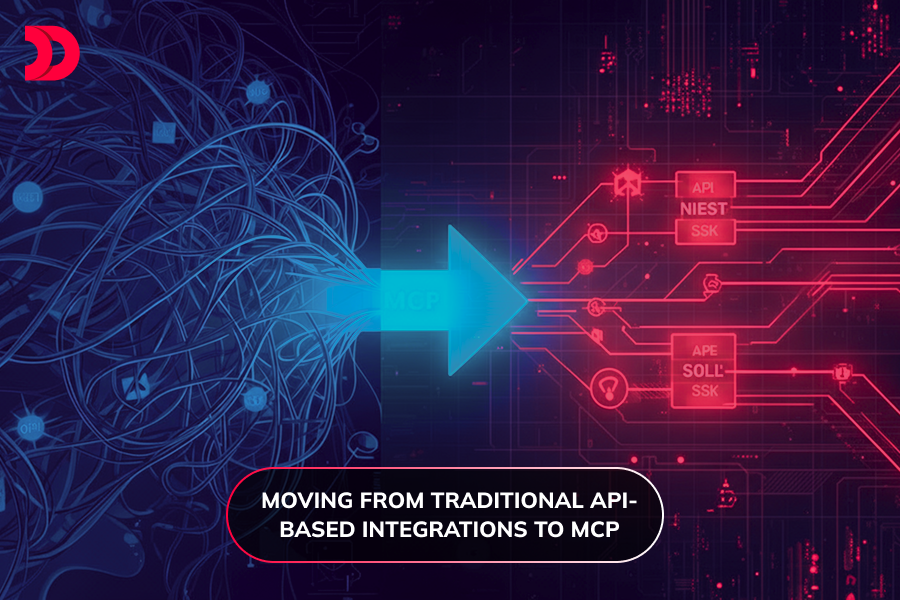
If you think deeply, the last decade of software has been built on APIs, SDKs, and endless custom connectors. Yes, definitely, they were the bridge that helped applications talk to one another. But today, as AI systems evolve into multi-agent...
Well, do you know what truly makes the Model Context Protocol (MCP) work? It is not just the idea of standardization. It is the architecture that allows AI agents and tools to communicate smoothly. Or we can say a design...









 Jan 09, 2026