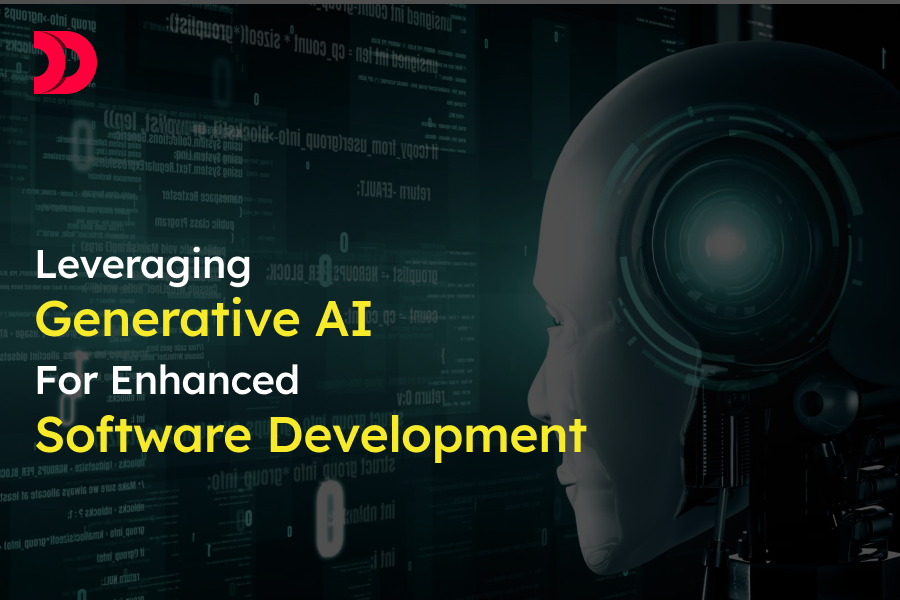
Generative AI has brought radical changes in creativity and innovation in almost every sector. When it comes to software development, Generative AI can automate and enhance all the stages of SDLC from ideation to maintenance. This post talks about the scope and importance of Generative AI for software development. Also, we will discuss the key benefits of Generative AI in developing custom software along with useful strategies for AI implementation.
Let’s begin.
Impact of Generative AI in Software Development
Generative AI tools can automate routine tasks in the software development lifecycle. It enables developers to focus on higher-level problem-solving, implementing innovative features, and ensuring a seamless performance. Furthermore, Generative AI can generate boilerplate code and entire test cases to reduce the time for coding and testing. It leads to quicker time-to-market for companies.
This technology also assists in reviewing code and identifying potential bugs. It suggests improvements to ensure cleaner and more reliable code. It is useful for code refactoring and modernization. Finally, Generative AI tools can make coding more accessible to a wider range of people, even if they have limited programming knowledge. Enterprises can consult a reputable software development company to leverage the benefits of Generative AI.
Benefits of Generative AI in Software Development
Generative AI brings transformational changes in the software development process. Here are the key benefits of Generative AI for software development:
- Increased Speed and Productivity
Tools like code completion and code generation systems in Generative AI can help developers write code more quickly, accurately, and efficiently. This technology can generate boilerplate code and enable developers to create mockups, prototypes, etc., for quicker experimentation.
- Enhanced Code Quality with Consistency
Generative AI is an active reviewer and helps developers improve the overall quality and reliability of code. They can identify security vulnerabilities, potential bugs, and other issues with suggested fixes and improvements. Moreover, it assists developers in following standards.
Writing and maintaining documentation becomes easy as Generative AI automates this process. It ensures that the documentation remains up-to-date. It also enables developers to get information from different sources, like design documents and bug reports.
- Improved Testing and Debugging
This technology saves a lot of time of developers by streamlining testing and debugging processes of the SDLC. Developers can get suggestions based on the analysis of error logs. These suggestions are useful for fixing the issue.
A reliable and experienced AI development services provider can make high-end business software in a relatively short time by leveraging these benefits.
Key AI Implementation Strategies in Software Development
Integration of AI technology into the software development lifecycle is useful for automating the most repetitive and mundane tasks. Whether it is generating boilerplate code or creating initial documentation, AI can handle these processes to make developers free to focus on more creative tasks like architectural design and strategic planning. It also democratizes software creation, focusing on governance and security.
However, AI-generated code may contain subtle bugs or logical flaws. Therefore, it is essential to review and validate all these outputs manually before deploying. This is also necessary to maintain code quality and security. A software development company can also consider integrating AI into existing CI/CD (Continuous Integration/Continuous Deployment) pipelines to streamline the DevOps process.
How AI Models Enhance Software Development Process
AI models can automate time-consuming tasks in the software development process. For example, AI-powered assistants like GitHub Copilot can generate code snippets and complete functions with natural language prompts. This can accelerate the coding process. Moreover, AI models are beneficial for improving quality assurance by generating detailed test cases and analyzing code for bugs or security vulnerabilities.
Another use of generative AI models is in optimizing project management and predicting timelines. While AI can automate the process and suggest solutions, developers must make final decisions. It is crucial for ensuring the security and performance of AI-generated code. Furthermore, developers should ensure that code is compliant with project standards and remains in line with the overall architectural vision.
AI-human collaboration can achieve higher productivity and accuracy in the SDLC. AI development service providers utilize AI models to deliver higher-quality, enterprise-grade software in a given timeline.
Concluding Remarks
Generative AI has opened the doors to innovation and creativity in the software development domain. It enables developers to save time and effort by streamlining processes and automating repetitive tasks. Better documentation and democratization are some of the major benefits of generative AI for software development. Your company can get a competitive edge through feature-rich software with seamless performance using this revolutionary AI concept.
DevsTree is a renowned software development company. We utilize advancements of AI technology, including generative AI, to build highly customized software. We assist our global corporate clients in leveraging the benefits of this revolutionary technology. Contact us to learn more about the benefits of our AI development services for your business.









 Feb 13, 2026