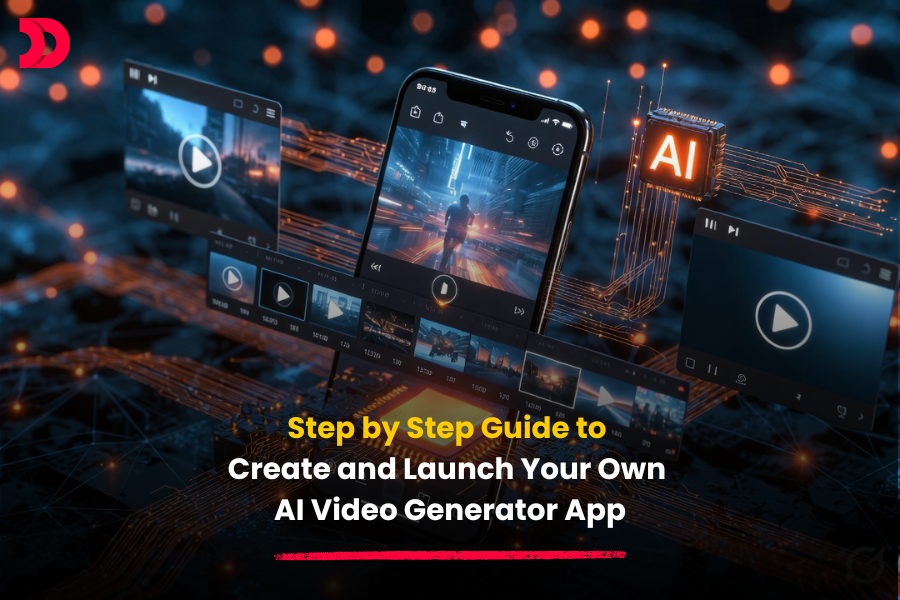
AI video generation is rapidly transforming the content creation industry. Businesses, marketers, and creators are now using AI tools to produce professional videos in minutes instead of hours. Because of this demand, many startups and tech companies are building their own AI video generator platforms.
Popular platforms like Canva, HeyGen, Runway, and Adobe Firefly have proven that AI powered video creation is one of the fastest growing segments in the creator economy.
If you are planning to build your own AI video generator app, this guide explains the complete step by step development and launch process.
What is an AI Video Generator App?
An AI video generator app is a platform that uses artificial intelligence to automatically generate videos from user input such as text prompts, images, or scripts.
These platforms typically use advanced AI models such as:
Text to video models
Image to video models
AI avatar generation
Voice synthesis
Scene generation algorithms
Some modern AI systems are built on powerful models such as Sora and Stable Video Diffusion that convert prompts into realistic videos.
Businesses use these apps for:
YouTube content creation
Marketing videos
Social media ads
Training videos
Product demos
Step 1: Define the Core Functionality of Your AI Video App
Before starting development, decide what type of AI video generation your app will provide.
Common AI Video App Types
App Type
Description
Text to Video
Users generate videos from text prompts
Image to Video
Convert images into animated videos
Script to Video
Upload scripts and generate narrated videos
AI Avatar Video
AI characters present the script
Social Media Video Generator
Create short form content
For example, platforms like InVideo AI focus heavily on script to video automation, while tools like HeyGen specialize in AI avatar presenters.
Step 2: Choose the Right AI Models and APIs
Building a video generation engine from scratch is expensive and time consuming. Most startups use existing AI APIs.
Popular AI video technologies include:
AI Technology
Purpose
Stable Video Diffusion
Generate video frames from images
Sora
Advanced text to video generation
OpenAI APIs
Prompt understanding and generation
Creatomate
Video rendering API
Companies often combine multiple AI services to deliver better video quality.
Step 3: Build the Backend Infrastructure
The backend handles heavy processes like AI inference, rendering, storage, and user management.
The frontend is where users interact with the AI system.
A good AI video app interface should allow users to:
Enter text prompts
Upload images or scripts
Choose video style and templates
Select voiceovers
Preview generated videos
Popular frontend frameworks include:
Framework
Use Case
React
Web AI video platforms
Flutter
Cross platform mobile apps
Next.js
SaaS video generation tools
A simple and intuitive UI dramatically improves user adoption.
Step 5: Add Video Editing Features
AI generated videos often require editing tools before export.
Important features include:
Text overlays
Background music
Scene transitions
Voiceover editing
Video trimming
Tools like FFmpeg are commonly used to process and render videos programmatically.
Step 6: Implement Video Export and Sharing
Users should easily export their final video.
Common export options include:
MP4 video download
Direct social media sharing
Cloud storage saving
YouTube upload
High quality exports (1080p or 4K) improve platform credibility.
Step 7: Test and Optimize the AI System
AI video generation requires extensive testing.
Focus areas include:
Prompt accuracy
Rendering speed
Video quality
Server load performance
User experience
Analytics tools help track user behavior and improve generation accuracy over time.
Key Technologies Required to Build an AI Video Generator App
Component
Technology
AI Model
Stable Video Diffusion / Sora
Backend
Python / Node.js
Frontend
React / Flutter
Storage
AWS S3 / Google Cloud Storage
Video Processing
FFmpeg
Combining these technologies creates a scalable AI video generation platform.
Cost to Build an AI Video Generator App
The development cost depends on complexity and features.
App Complexity
Estimated Cost
Basic AI Video Tool
$30,000 – $60,000
Advanced AI SaaS Platform
$80,000 – $150,000
Enterprise Video Generation Platform
$200,000+
Major cost factors include:
AI model integration
GPU infrastructure
Video rendering system
AI training and optimization
Many startups reduce development cost by outsourcing development teams.
Monetization Strategies for AI Video Apps
AI video platforms typically generate revenue through SaaS pricing models.
Common monetization options include:
Monthly subscription plans
Pay per video generation
Enterprise licensing
API access for developers
Platforms like Canva and Runway use subscription models successfully.
Why Businesses Are Investing in AI Video Platforms
Demand for AI generated content is growing rapidly due to:
Social media video demand
Creator economy expansion
AI automation benefits
Reduced production cost
Businesses using AI video tools can create content 10 times faster than traditional production methods.
Final Thoughts
AI video generator apps represent one of the biggest opportunities in the AI SaaS market. By combining advanced AI models, scalable cloud infrastructure, and intuitive user interfaces, businesses can create powerful platforms that automate video creation for millions of users.
If you plan to launch an AI video generator app, partnering with an experienced AI mobile app development company and focusing on the right technology stack, development strategy, and monetization model will help you build a competitive platform. A skilled development partner can help integrate AI models, optimize performance, and ensure a seamless user experience across devices.
Companies that start early in this space have the potential to capture a rapidly growing market driven by content creators, marketers, and businesses worldwide. By collaborating with a reliable AI mobile app development company, businesses can accelerate development and successfully enter the fast-growing AI video generation ecosystem.
The software industry is now building AI-Native software from the ground up rather than using AI as an add-on feature. Before, software companies required a team of developers, designers, testers, and engineers to handle the entire software development lifecycle (SDLC)....
Today, almost every business operates on AI agents, and why wouldn’t they? Artificial Intelligence (AI) has helped businesses simplify day-to-day tasks like handling large amounts of information and supporting complex tasks, making decisions, and automating workflows. AI agents can perform...
If using an AI-powered app can make everyday tasks easier, imagine how an AI-Native app can make your life easier. Well, today’s technology has gone beyond imagination, and we are here to turn your imagination into reality by helping you...
The corporate world witnesses a paradigm shift from RPA (Robotic Process Automation) and chatbots to autonomous AI agents. Both RPA and chatbots have reduced basic manual work significantly, however, they still require constant human supervision. They also require prompting for...
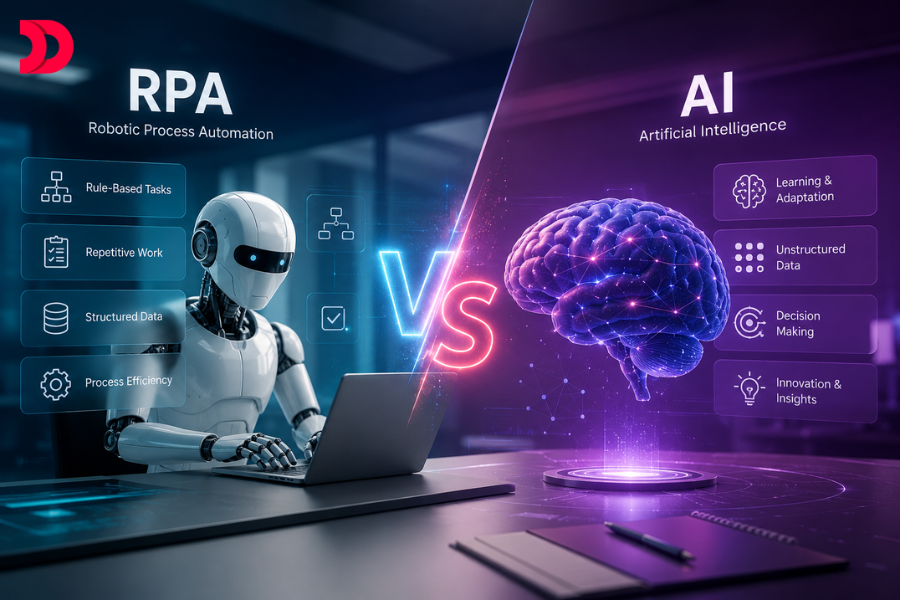
Are we still using humans to do complex repetitive work in the age of robots and Artificial Intelligence? Well, you might be missing out on two of the most popular technologies, Robotic Process Automation (RPA) and Artificial Intelligence (AI). Both...
A few years ago, most SaaS startups treated AI like an optional feature. Now it is becoming the core selling point. Whether it is customer support automation, AI-generated reporting, recruitment platforms, workflow tools, predictive analytics, or intelligent CRMs, businesses everywhere...










 Sep 10, 2026