In the era of Generative AI and Large Language Models (LLMs), data governance remains at the center stage. Data is the DNA of modern enterprises; therefore, it requires the necessary control and security with accuracy. Data governance can help companies achieve these objectives while building trust. This blog discusses the scope of data governance and its role as an enabler of AI.
Let’s start with the reasons why trusted data is essential for effective AI implementation.
Importance of Trusted Data in AI Adoption
A new era of artificial intelligence, driven by gen AI tools, is gaining popularity in the corporate world. A recent McKinsey survey has revealed that as many as 62 percent of respondents are experimenting with AI agents. However, it is essential to ensure that trusted data is available for effective AI adoption. As per various industry benchmarks, almost 80 percent of an AI project’s time goes on data preparation.
–GIGO (Garbage In, Garbage Out) Reality
AI models are statistical mirrors and reflect the data-based patterns. Biased, fragmented, or outdated data can give unreliable AI-based output. Poor data might lead to a factory shutdown in the example of predictive maintenance. Such data can cause ‘hallucinations’ in the customer service chatbot that results in damaged brand reputation.
– Issue of Data Silos
The lack of a data governance framework keeps data in silos. As a result, marketing may define a ‘customer’ differently than the finance team does. When an AI tries to synthesize this information, it may encounter friction. It ultimately shows down development and creates problems in AI outcomes.
It is interesting to jot down the core pillars of data governance.
Four Pillars of Data Governance
Any company needs to make a proper strategy for building a data-driven culture. Here are the four pillars of data governance-
Data Quality for Reliability
Data quality is the measurement of the capability of a dataset to serve its intended purpose. It includes accuracy, completeness, timeliness, and consistency.
Security and Access Control
Role-Based Access Control (RBAC) is a crucial component of the data governance strategy for ensuring access control and data safety.
Regulations and Compliance
Companies must follow the necessary regulations, including GDPR, CCPA, HIPAA, and Basel III. Data governance also enables the framework to ensure compliance conditions.
Data Lineage
It is the visual map of data’s journey from its origin to its final destination. It is essential to get the answer to some critical questions, including where the number came from. etc.
A reputable data solution provider assists companies in considering these four pillars in making an effective governance strategy.
How Data Governance Becomes AI Enabler
Data governance has gone beyond the department of numbers and become an essential factor in controlling the adoption of modern enterprise AI. In other words, data governance acts as the ‘brakes’ on a high-performance car of enterprise AI! Companies can segregate and tag their data with metadata. It enables a business analyst to get the right dataset instantly. They can simply search a ‘Data Catalog’ and use it immediately after seeing the quality score.
Moreover, AI models built on ungoverned data cannot remain intact for a long time. Once the underlying data changes, the model breaks. Data governance provides a stable and version-controlled foundation for making AI models easier to maintain over time. Let’s dig deeper into the role of data governance in increasing business value.
How to Connect Governance to Business
It is essential to connect governance to your business directly to enhance its overall value. It is better to consider data governance as a business strategy rather than a project. Here are the three major steps for unlocking business value using data governance-
AI Predictions and Performance
When it comes to AI models, we can say that higher data quality can increase the model’s accuracy. Let’s take an example of a retail giant. Even a 2 percent increase in the accuracy of a demand-forecasting model translates into millions of dollars saved in inventory. The healthcare sector can benefit from improved diagnosis and treatment through accurate, data-governance-driven AI models.
Audit Readiness and XAI
Regulators want to ensure accountability of the algorithm. Explainable AI (XAI) can make it possible for companies. A robust governance framework with accountability can provide regulators with the necessary audit trail to prove that the data usage is valid and the access is authorized. Simply put, the XAI shows that the process was compliant. It can transform the audit process into a routine report generation.
Quicker Business Decisions
Modern businesses need to make quick and insightful decisions. In this era, speedy decision-making can give a competitive advantage. Data governance can eliminate silos and keep all the stakeholders on the same page. It ensures that spreadsheets remain correct and meet the business strategy. Let’s compare the overall impact of data governance on various AI-based and enterprise features.
Feature
Without Data Governance
With Data Governance
Data Discovery
Manual and Traditional
Searchable Data Catalog
Data Trust
Low and Manual Verification
High and Automated
AI Reliability
High Error Rates
Explainable and Accurate
Compliance
Reactive and High-Risk
Proactive and Automated
Decision Speed
Days or Weeks
Real-Time or Near Real-Time
Successful data governance can be a game-changer for modern enterprises. However, it is necessary to consider several aspects for implementing data governance effectively. You can start by selecting a specific business problem and identifying individuals for handling the policy. Moreover, modern data governance tools are useful for automating several processes like data profiling and sensitive data discovery.
It is better to consult a reputable data solution provider to establish a data culture and implement a data governance policy successfully.
Concluding Remarks
Data governance is necessary to get control and safety of information with accuracy. Companies can thrive by establishing four pillars of data governance. However, enterprises need to connect governance with AI technology to leverage the advantage. A trusted data solution provider can assist companies in establishing effective data governance.
DevsTree IT Services is a data science and automation specialist. We assist modern enterprises to get the benefits of data science and future-ready technologies like AI and ML. Contact us to learn more about our services.
When a single Kubernetes cluster no longer meets your business requirements, you might need to opt for Multi-cluster Kubernetes, multiple independent clusters. Mostly, a single Kubernetes cluster is enough to deploy, scale, and manage modern applications. However, as the company...
I am sure you heard about AI and generative AI, but have you ever heard of Shadow AI? Since the growing popularity of ChatGPT and other AI tools, more people are becoming aware of Shadow AI. So what exactly is...
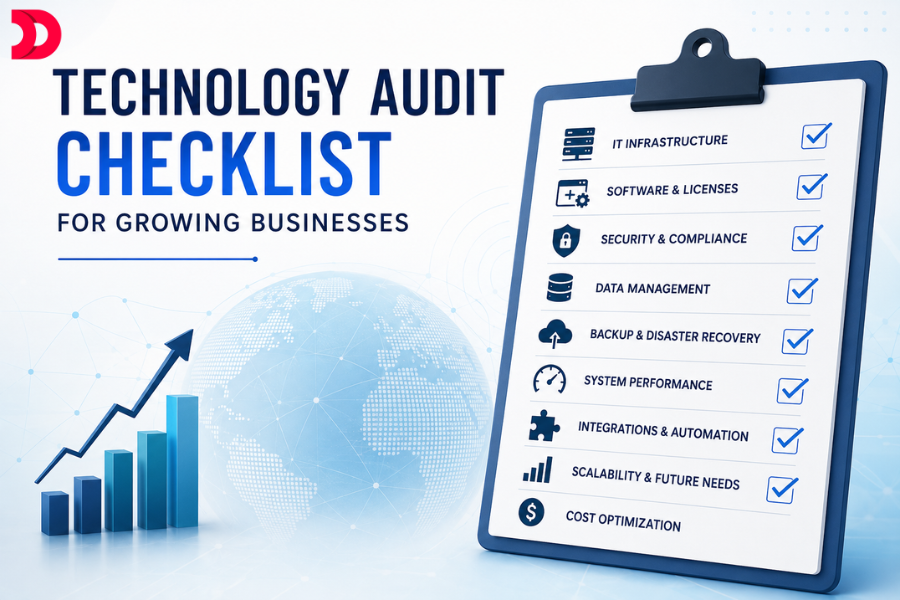
Sales pipelines expand, and hiring cycles accelerate- all these indicators highlight a hyper-growth phase of your enterprise. It is, however, necessary to consider that every operational element stretches to its limit in this phase. One such aspect is information technology...
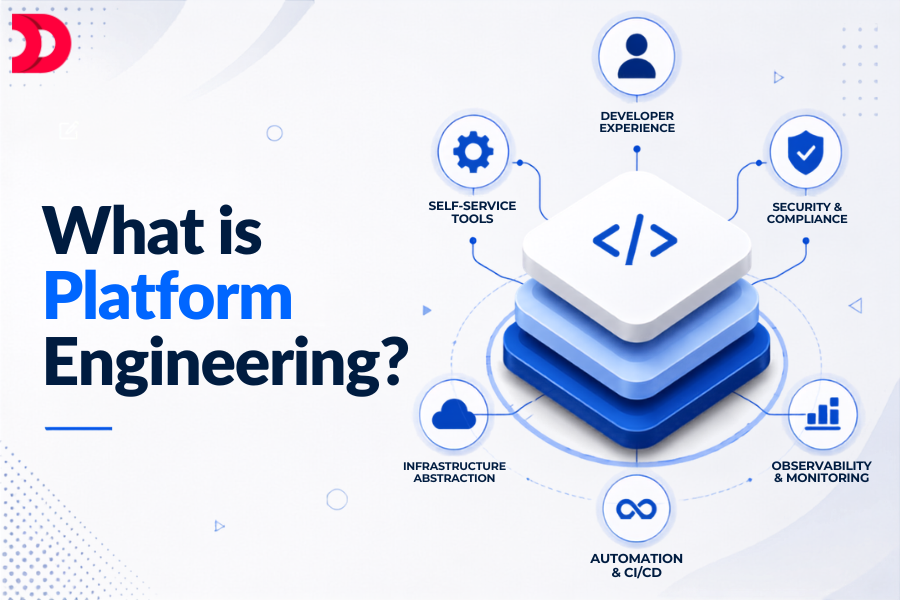
Platform engineering is an emerging discipline in software development. It can make the developer experience (DevEx) better and help them deliver products quickly. The platform engineering’s focus stays on building automated, self-service internal developer platforms (IDPs). Platform engineering teams build...
Digital Twin Technology is a digital representation of a physical object, process, system, or environment that continuously receives real time data from sensors, IoT devices, software, and connected systems. Unlike a static 3D model or simulation, a digital twin evolves...
Top Reasons Companies Are Moving to Hybrid Cloud Solutions On-premise or private cloud and public cloud approaches have made the entrepreneur’s life easy. In this competitive business scenario, however, it is not enough to implement a single concept. The world’s...












 Oct 01, 2026