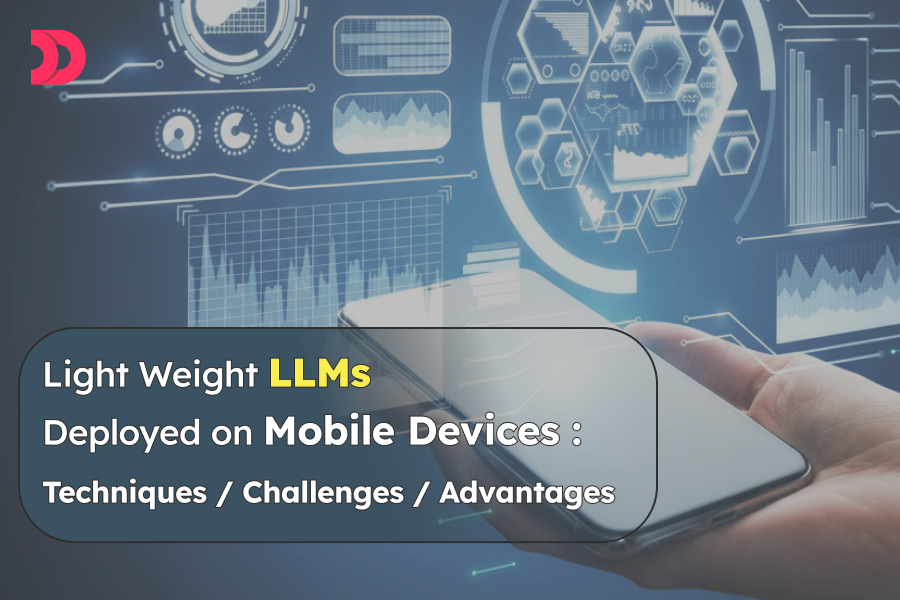
LLMs or large language models can change the way businesses automate tasks. However, in this mobile-driven world, lightweight LLMs are necessary because they are specifically optimized for smartphones and tablets. These LLMs have optimized inference engines and efficient memory usage patterns ideal for mobile platforms.
This post talks about the scope of lightweight LLMs for mobile devices with some use cases. Before moving ahead, let’s go through the market trend of LLMs.
Market Trends of LLMs
LLMs have started gaining popularity in recent years. As per the MarketandMarkets report, the market size of LLMs is expected to grow from USD 6.4 billion in 2024 to USD 36.1 billion in 2030. This shows over 33 percent of CAGR in the 7 years. The following graph highlights the prediction of massive growth in LLM market.
Another research report has predicted that around 750 million apps will use LLMs globally for automating 50 percent of digital work by 2025. As the market trend of LLMs is shifting from exclusive cloud-based models like GPT-4 to lightweight models for smartphones, this much penetration is possible.
The growing demand for ultra-low latency for real-time applications and enhanced data privacy are drivers for the growth of lightweight LLMs. The focus is on adopting advanced optimization techniques like quantization and NPUs (Neural Processing Units) to make intelligent apps. Let’s delve into some important techniques for deploying lightweight LLMs on mobiles.
Techniques for Deploying Lightweight LLMs on Mobile Devices
The deployment process of LLMs includes the integration of these models into the system. When it comes to the deployment of lightweight LLMs on mobile devices, it is about making LLMs ready to handle inputs. They can produce outputs after processing inputs. Some of the common deployment techniques for lightweight LLMs are-
It refers to hosting and running LLMs on remote, cloud-based servers. This deployment enables users to access and utilize language models without managing infrastructure. Cloud service providers handle computing resources and provide the necessary storage facility.
This technique is useful for edge devices, like smartphones, IoT sensors, and specialized hardware. Edge AI can work on low latency and offers more privacy with quicker decision-making. Moreover, it has less dependency on the Internet than cloud-driven devices.
This technique involves the combination of on-premise infrastructure and cloud-based resources for optimizing cost. This is a hybrid approach that enables organizations to leverage the scalability of the cloud while ensuring data security and gaining more control.
LLM app development companies use different deployment strategies, like framework optimization and hardware acceleration, to leverage the benefits of lightweight LLMs.
Key Challenges of Deploying LLMs on Mobile Devices
It is quite challenging to deploy LLMs on mobile devices, and requires expertise in both LLMs as well as mobile app development domain. Here are some of the crucial challenges of LLM deployment on mobile devices-
- Complexity in Size and Resources
Model complexity and computational resources can make the integration of LLMs challenging. As LLMs require significant computational power to function, it is difficult to deploy them on resource-constrained smartphones.
- Hardware and Cost Limitations
LLMs need extensive configuration of infrastructure, especially when it is necessary to manage multiple models at once. This leads to high operational costs and other issues.
Different types of datasets are used to train LLMs. This data can be raw, and therefore, LLMs can adopt toxic behavior or a biased approach from the original online source.
- Model Monitoring and Governance Issues
LLMs can drift or show unexpected behavior in new environments. This challenge makes the monitoring of LLM difficult. Moreover, governance is necessary to ensure strict adherence to data privacy and accountability.
Integration of LLMs with existing ecosystems can be one of the key challenges due to differences in architecture and computational requirements. Legacy systems are rule-based, which causes trouble for LLMs.
- Privacy and Compliance-Related Problems
Language models handle vast data volumes from different sources that may contain sensitive or personal information. This may create issues related to consumer trust and data privacy.
A reputable LLM development company can help you address these challenges effectively and gain the benefits of lightweight LLMs.
Top Advantages of Lightweight LLMs on Mobile
Lightweight LLMs offer several top advantages on mobile devices. Here we mention a few of them-
Though the initial setup requires investment, the lightweight LLM deployment in the mobile app is cost-effective with long-term, frequent usage.
LLMs process sensitive data without sending it to cloud servers. This ensures superior data control and privacy protection. It also makes compliance with data regulations easier.
Lightweight models are highly customizable for devices that gather local user data. This characteristic makes LLMs capable of adapting to the user’s behavior, preferences, and private context.
Lightweight LLMs enable developers to control the model’s architecture and add updates. This can help them build unique and proprietary features to get a competitive edge.
The future outlook for LLMs is promising. Companies can leverage these benefits by hiring the right AI app development partner.
Future Outlook for LLMs
Advancements in model optimization, like quantization and pruning, shape the future of LLMs. The paradigm shift from robust generative AI from the cloud to the edge can bring features, like offline language processing and personalized virtual assistants. We can expect that lightweight LLMs will become faster and more energy-efficient for mobile operating systems.
Concluding Remarks
The inclusion of lightweight LLMs on mobile devices brings a fundamental change in computing by prioritizing on-device intelligence. Trends like quantization will make LLMs more powerful and efficient in the future. However, it is always essential to address the challenges related to LLMs effectively to leverage their benefits and gain a competitive edge.
DevsTree is a leading LLM development company. We build and tailor models according to your business requirements, with expertise in NLP. Our team has vast experience in developing AI-driven apps, and your company can leverage it to address specific challenges. Contact us to learn more about the scope of lightweight LLMs in custom mobile apps.











 Oct 01, 2026