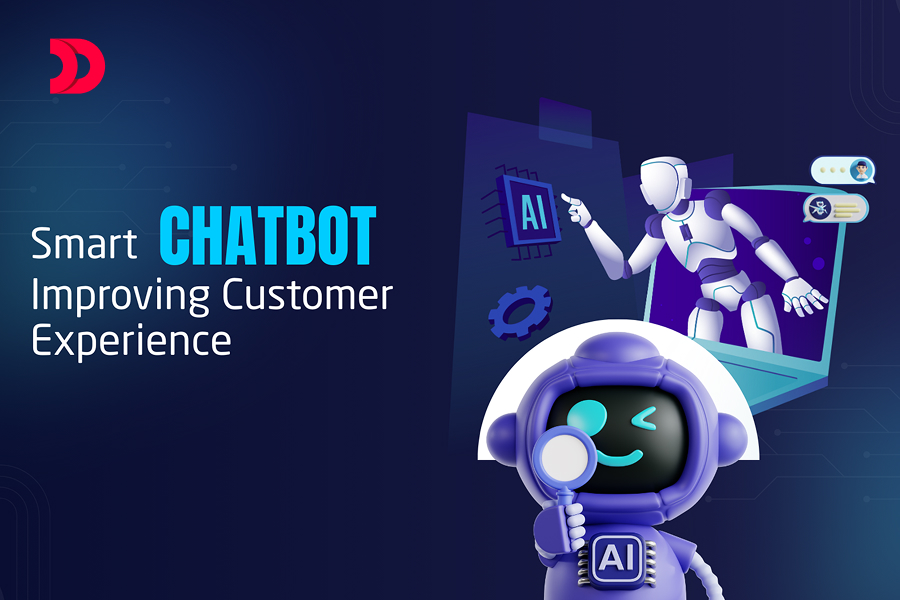
Companies worldwide are currently looking for something new in order to improve client experience and increase functionality. An AI chatbot for customer service is surely one of the most revolutionary solutions. AI chatbots are altering the whole arena of customer care with real-time, precise, and customized assistance.
A response to almost anything, from anything and everything in the domain of shopping and e-commerce to banking, to help reduce response time, reduce costs, and enhance customer satisfaction.
This blog shows how any company can improve customer service by learning what chatbots offer and which features are most valuable, then building an AI-based solution that adds value.
How Can Chatbots Improve Customer Service?
- Around-the-Clock Instant Support
The human agents would not be working twenty-four hours a day, but AI chatbots fulfill the function of any customer support interaction immediately. Chatbots eliminate unnecessary waiting times by providing services from tracking orders and clearing billing issues to responding to FAQs-even after business hours.
- One-on-One Customer Interactions
Currently, chatbots take advantage of Natural Language Processing (NLP) and machine learning to comprehend the wishes of the user and to generate personalized responses to those wishes. For instance, an e-commerce chatbot might recommend products based on the browsing history of the user, thus allowing a great level of conversion enhancement.
- Cost Savings & Scalability
It costs a lot to hire and train customer support staff. AI chatbots, once implemented, manage thousands of queries at once, saving on labor costs by as much as 30%. They also scale smoothly during high-demand periods.
- Seamless Omnichannel Integration
Today’s Customers reach out to brands through websites, social media, WhatsApp, or SMS. AI chatbots provide equal support on all these channels so that the experience is consistent.
- Data-Informed Perspectives for Enterprise Development
Chatbots can collect frequently occurring difficulties, the most often asked questions, a customer’s past purchases, and more. These days, companies use this data to enhance their marketing, services, and goods.
Advanced Features of AI-Powered Chatbots
Not all chatbots are created equal. In a customer service environment, the chatbot’s effectiveness resides in more than just the ability to dispense scripted replies. Some of the necessary characteristics that AI-enabled chatbot companies should focus on are:
- Natural Language Processing (NLP): Understands user intent, tone, and context so that the conversation is as human-like.
- Machine Learning Ability: Acts upon its learnings from prior engagements and improves itself.
- Omnichannel Integration: Seamless integration with the user via website, mobile application, WhatsApp, Facebook Messenger, etc.
- Sentiment Analysis: Detects sentiment from the customer whose conversation may be escalated to human agents when necessary.
- Backend Integration: Integration capability with CRMs, ERPs, and databases whereby it can pull customer information into another repository or push that information from another repository in real time.
- Fallback Mechanism: If the chatbot fails to solve the issue, there must be a smooth switching of the conversation toward a live agent.
- Analytics Dashboard: Measures performance, response accuracy, engagement, and other metrics for customer satisfaction.
If designed strategically, these features make sure that your chatbot contributes real value to your support system.
Chatbot Development Strategies for Businesses
The successful development and implementation of AI-powered chatbots is not just about the technology; it is also about making sure that the tool aligns with the business goals. Here are the strategies for chatbot development in businesses:
- Define Clear Objectives
Evaluate what the chatbot should do: Should it offer customer support? Will it generate leads? Or make appointments? Or maybe all of these? You can choose the functionality and design elements by clearly defining your objectives.
- Recognize Your Viewers
Create chatbot identities that accurately represent your target audience. What general problems do they have? What kind of voice do they want? You should match the audience’s expectations with the experience.
- Choose the Right Platform
Choose a chatbot platform that supports strong AI capabilities and remains scalable in the future. End-to-end chatbot creation relevant to your industry is handled by a reputable AI development company like Devstree.
- Human-Centric Conversation Setup
Developers should make sure that conversations remain human, sympathetic, use straightforward language, send brief messages, and inject humor or emotion when necessary.
- Testing, Learning, Iterating
Incrementally roll out, in-depth testing is a must, and the iterations should be based on feedback and usage analysis. A chatbot is never “done”; it always changes with your business and customer directions.
Conclusion:
The future of customer service is conversing, and AI chatbots lead the charge in this revolution. By taking away the mundane, chatbots attract potential customers more and also work in tandem to aid the human agents.
As one of the best AI Development companies, Devstree builds ingenious chatbot solutions that affect the real world. We at Devstree are of the opinion that AI Chatbots are improving customer service through meaningful digital conversations, not just efficiency.
Start your journey with Devstree today, where smart fits with good service.









 Aug 17, 2026