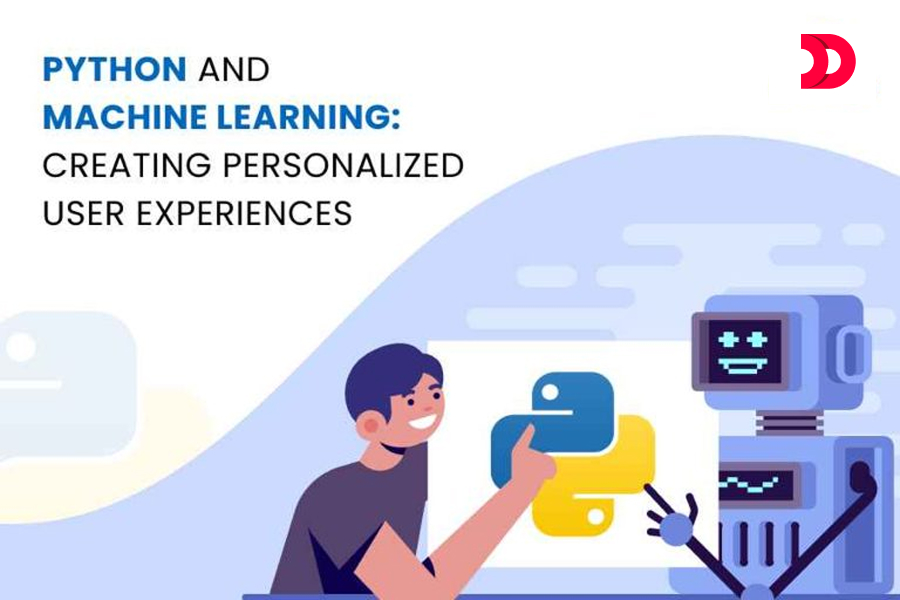
Any website or software designed for users should offer an enjoyable user experience, with companies constantly searching for innovative methods of improving it as technology advances. Python machine-learning techniques have received considerable interest as an innovative method of improving this aspect of user interaction.
Python is a highly flexible programming language equipped with machine learning technology. Employing Python Development Services enables businesses to design and create engaging user experiences using this powerful combination, while learning about their behaviour, adapting preferences and offering personalised interactions for each customer.
This blog will take a look at the amazing machine learning capabilities of Python’s realm and discuss how machine learning impacts the user experience. This blog will provide you with useful suggestions and practical examples that you can immediately apply if you are an engineer, or who is interested in understanding the ways that technology and user-centric design cross paths.
Understanding Machine Learning:
Before we look into the role of Python to improve the user experience, let’s know about machine learning. It is an artificial-intelligence area that is focused on allowing computer systems to improve performance and learn from the data, without needing to explicitly code. Utilising techniques and models of statistical analysis, machine learning systems can identify patterns, predict and continually adjust to changes in data. Hire Machine learning Engineers to efficiently leverage this latest technology to create innovations in your business operations.
Python’s Role in Enhancing User Experience:
The ease of use, the flexibility and a wide array of libraries makes it a perfect tool for creating applications with an enhanced user experience. Let’s see the ways an Python development firm, when paired and machine-learning, will change user interaction:
Personalised Recommendations:
Python and its machine-learning libraries such as sci-kit-learn or TensorFlow let developers create recommendation systems. These systems study patterns of behaviour and user data to give personalised recommendations, whether it’s suggesting items such as movies, music, or even films in accordance with your individual preferences. By recognizing the preferences of users and adapting to their preferences apps can provide more enjoyable and customised user experience.
Natural Language Processing (NLP):
Developers can make use of the Python NLTK (Natural Language Toolkit) library, as well as different NLP technologies to build apps that understand as well as respond to languages. This will allow interactivity chatbots, voice assistants and systems for sentiment analysis which can provide users with personalised assistance and seamless communications.
Image and Object Recognition:
Apps for object recognition and image recognition could be made by using Python or machine learning tools, such as OpenCV as well as Keras. These applications, which range from facial recognition to object detection, could enhance the user experience through simple interactions, such as unlocking devices with facial recognition, or enabling immersive experiences in augmented reality.
Predictive Analytics:
The extensive library of machine learning tools permits businesses to use predictive analytics to improve the user experience. Through the analysis of the past records, Python can help predict the preferences of users and anticipate their needs and give personalised suggestions or content in real-time.
User Behavior Analysis:
Python together with libraries such as pandas and NumPy allows developers to study user behaviour information to gain insights into preferences of users patterns, trends, and patterns. This information can be used to inform the design and improvement of interfaces for users, thereby improving navigation, display of content as well as the overall experience for users.
Conclusion:
Python combined with machine learning has transformed the way we think about user experience. Hire Python Programmers with the adaptability that makes it an important tool in increasing user experiences, from personalised suggestions and natural language processing to picture recognition and predictive analytics.
Python with machine learning will play an increasingly important role in determining the future of user experience as organisations continue to prioritise user-centric design. Hire Machine learning engineers that can design apps that comprehend, adapt, and connect with users in previously imagined ways by leveraging the power of Python’s machine-learning capabilities.










 Jul 24, 2026