Category :Data Analytics
Date :10 Dec, 2024

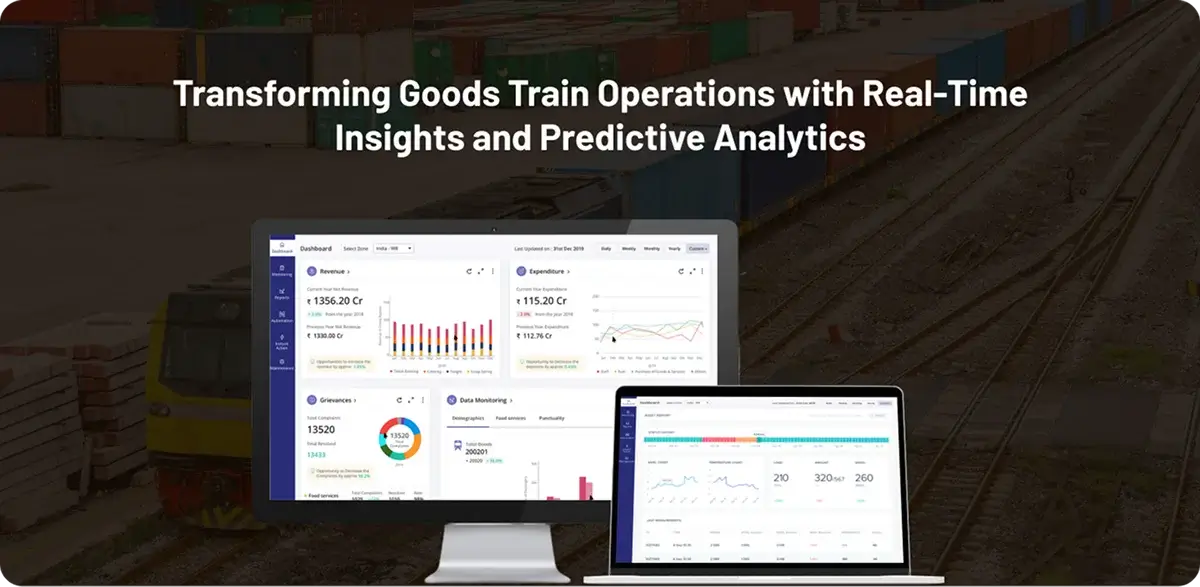
The logistics and transportation industry is rapidly changing as rail freight companies implement innovative, data-driven solutions that increase operational efficiency. A case study on the building of a robust Goods Train Dashboard helps us understand how to improve goods train operations in spite of its unique challenges. This solution will leverage advanced technologies like AWS Glue, Snowflake, Power BI, and Amazon Redshift to seamlessly integrate, process, and visualize real-time data to enable smarter and faster decision-making and redefine operational excellence in rail logistics.
The client required a centralized dashboard to integrate real-time data to deliver actionable insights and enable predictive analytics for optimizing train operations, reducing downtime, and improving efficiency.

Real-Time Train Positioning
Track train locations and movement with GPS-enabled current updates. Predictive alerts based on mileage, wearing of components, and climatic conditions to reduce downtime.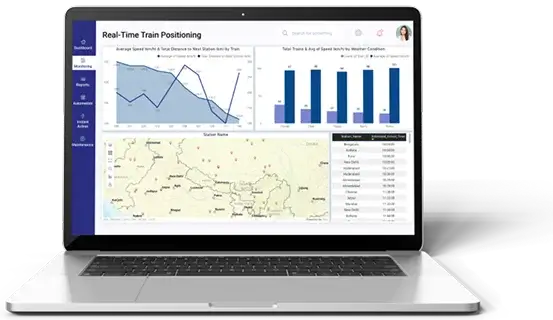

Fuel Consumption Summary
Understand fuel usage across routes and engine types to improve and reduce costs.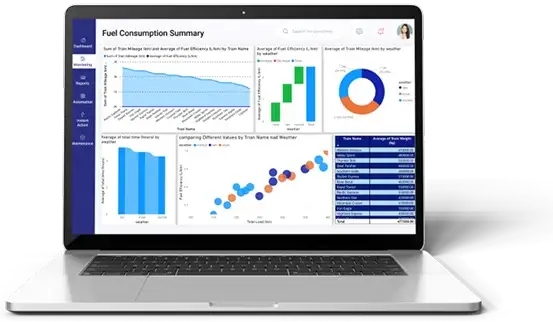

Load Efficiency in Visualization
Get detailed metrics concerning cargo weight and volume, as well as in terms of loading and unloading times for better load distribution.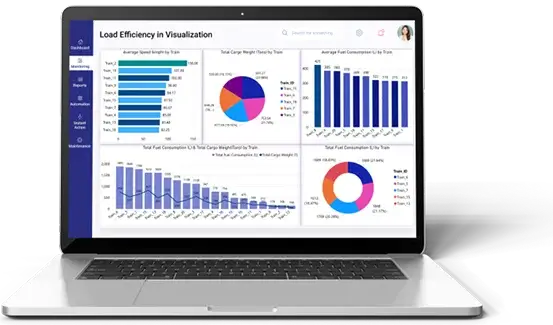

Multi-Departmental Accessibility
Role-based access to the dashboard is tailored for operators, dispatchers, and maintenance teams to cater to specific needs.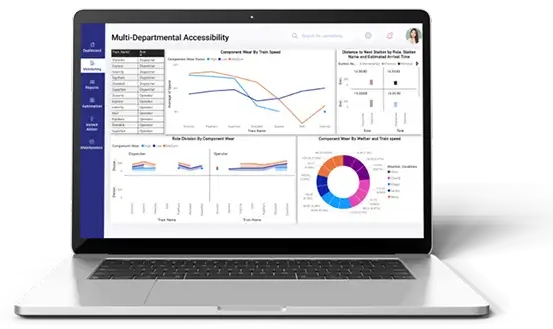
Technologies we used

Data Integration AWS Glue

Data Warehousing Snowflake

Data Visualization Power BI

Analytics & Processing Amazon Redshift
The Goods Train Analytics Dashboard redefined freight operations by centralizing critical data, from real-time train tracking to fuel usage and load efficiency, into a single, intuitive platform. This empowered operators, dispatchers, and maintenance teams to make faster, smarter decisions, resulting in reduced downtime, optimized resource allocation, and improved operational efficiency. Its scalable architecture not only supports current logistics needs but also lays the groundwork for predictive analytics, automation, and AI-driven railway management. As rail networks evolve, this solution positions freight operations for a smarter, more connected future.