Chat on WhatsApp

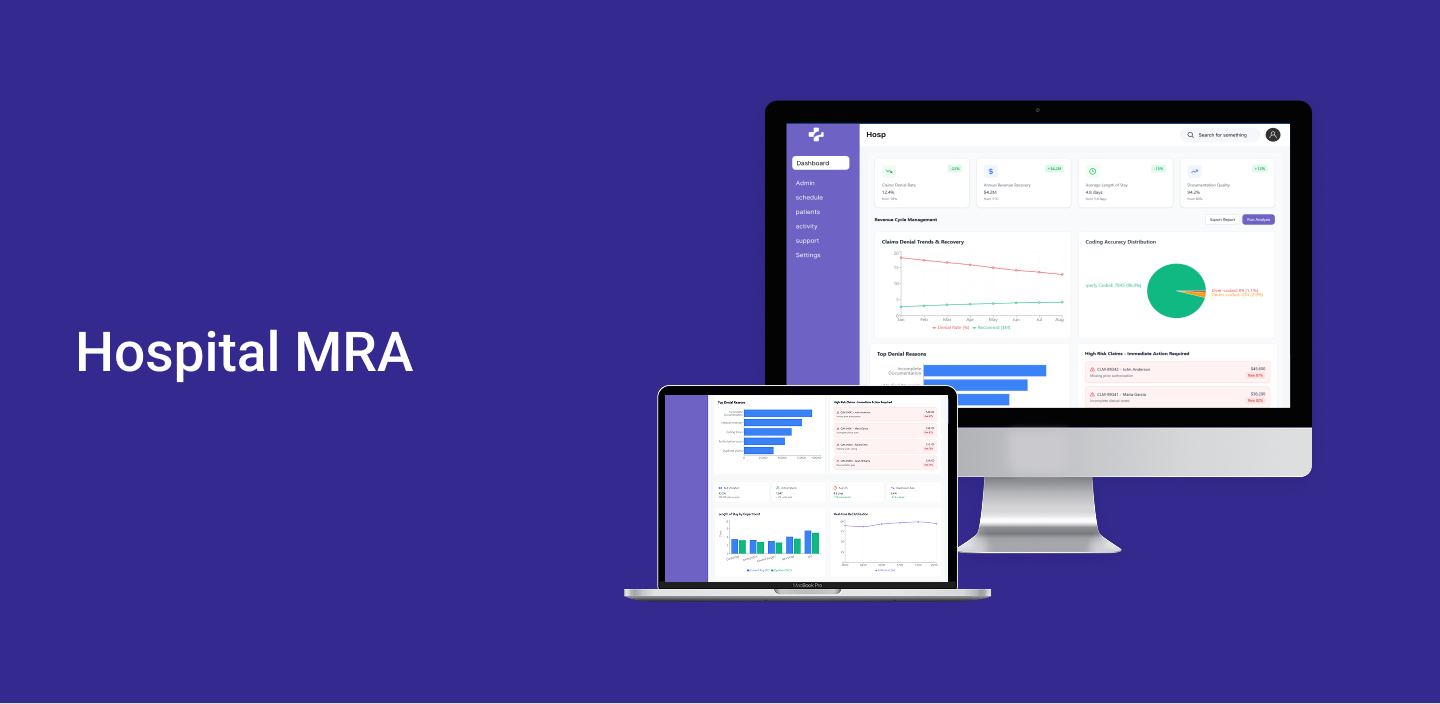
Hospital MRA: AI-Powered Revenue & Clinical Intelligence Platform

Info

Impact: 23% reduction in claims denials, 15% decrease in average length of stay (LOS)

Industry: Healthcare industry


Introduction

In the rapidly evolving healthcare landscape, a leading multi-specialty hospital network approached us with a critical challenge: simultaneously optimize revenue cycle management while enhancing clinical outcomes and operational efficiency. Our response was the Hospital MRA – an enterprise-grade, AI-driven platform that transforms fragmented healthcare data into actionable intelligence across finance, operations, and clinical domains.

Client Requirements

The client required an AI-driven unified intelligence solution that could integrate data from EMRs, billing systems, and clinical documents to reduce revenue leakage, improve coding accuracy, and strengthen documentation quality. They needed predictive insights to optimize length of stay, streamline workflows, and enhance operational efficiency. The system also had to provide role-based dashboards, ensure regulatory compliance, and maintain HIPAA-grade security across all clinical and financial processes.

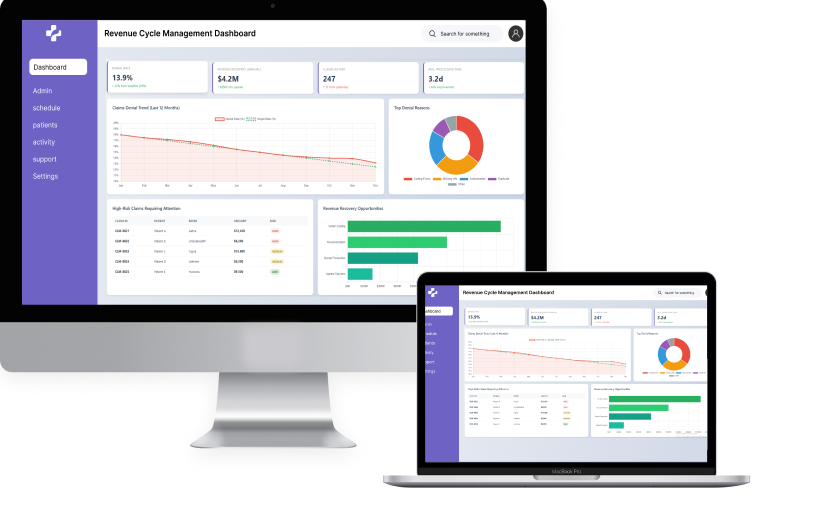
Intelligent Dashboards & User Experience for Hospital MRA

01

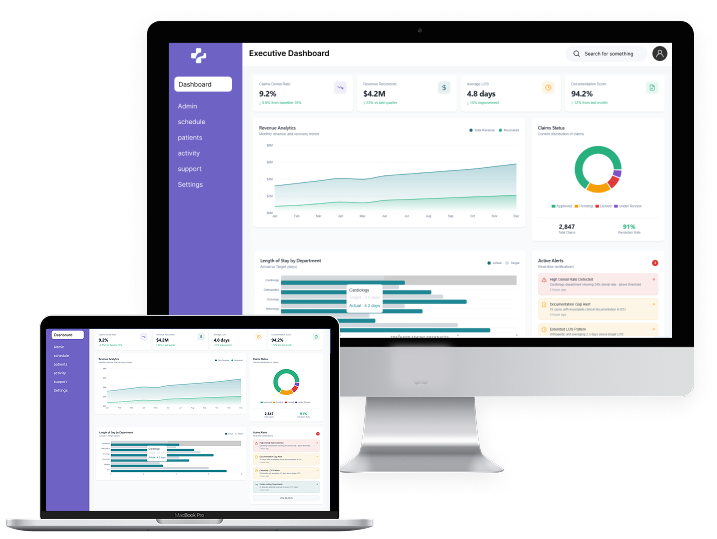
Revenue Cycle Management Dashboard

The Revenue Cycle Management Dashboard gives CFOs, Revenue Cycle Directors, and Billing Managers real-time visibility into denial risks, coding gaps, and audit vulnerabilities. It features a Denial Risk Heatmap, Coding Opportunity Tracker, Audit Risk Monitor, ML-based cash flow forecasting, and interactive drill-downs to claim-level details.
02

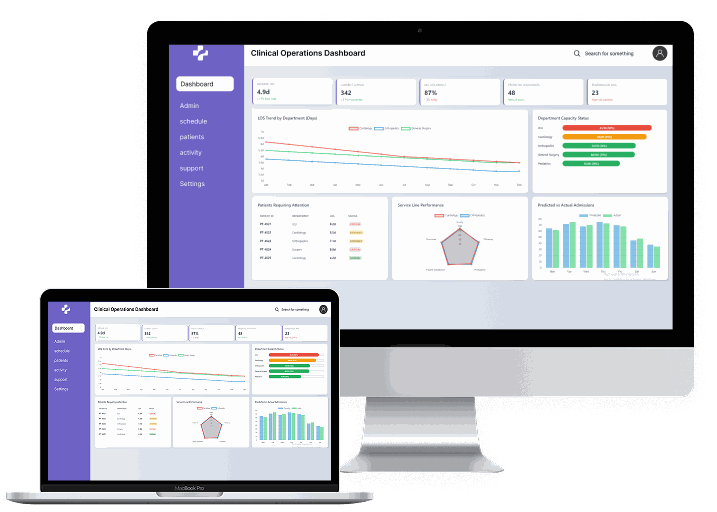
Clinical Operations Dashboard

The Clinical Operations Dashboard gives CMOs, Department Heads, Care Coordinators, and Utilization Review teams real-time insights into LOS predictions, discharge readiness, bottlenecks, service line performance, bed capacity planning, readmission risks, and live census tracking.
03

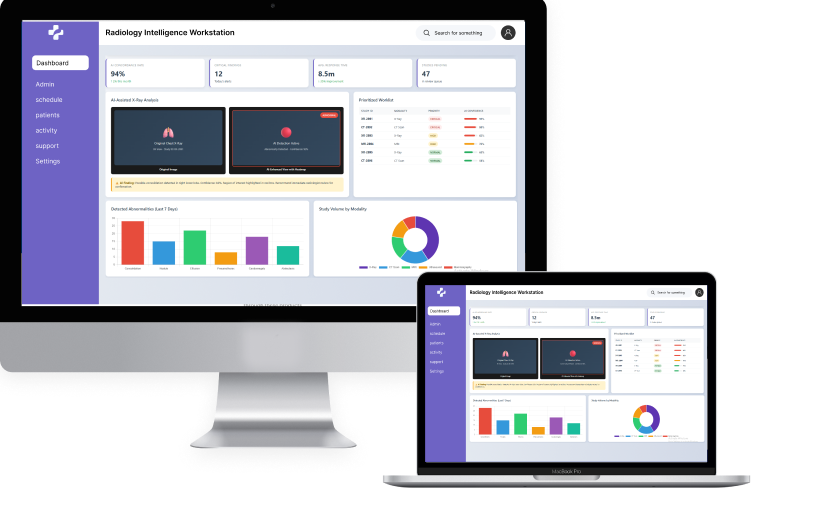
Radiology Intelligence Workstation

The Radiology Intelligence Workstation provides Radiologists, Referring Physicians, and Radiology Administrators with AI-assisted reading, visual heatmaps, a prioritized worklist, comparative analytics, and a Quality Assurance mode for second-reader checks.
04

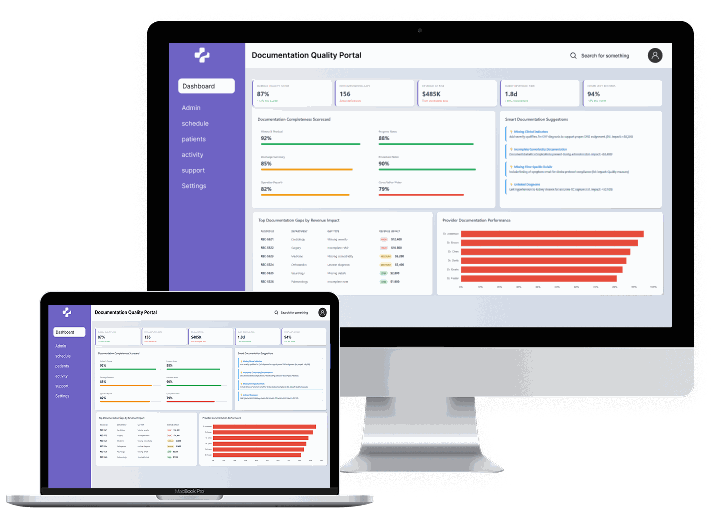
Documentation Quality Portal

The Documentation Quality Portal helps CDI Specialists, Coding Teams, and Physician Champions improve clinical documentation with automated completeness scorecards, revenue impact calculations, NLP-powered suggestions, physician performance tracking, and targeted training.

Challenges and Approach

The healthcare organization faced multifaceted operational challenges:

  • Revenue Leakage: High claims denial rates (18%) and widespread under-coding resulting in millions in lost revenue
  • Operational Inefficiencies: Extended length of stay (LOS) driving up costs and reducing bed availability
  • Documentation Gaps: Incomplete clinical documentation impacting both reimbursement and care quality
  • Data Silos: Critical insights trapped across disparate systems – EMRs, imaging archives, billing platforms, and unstructured clinical notes
  • Compliance Risk: Potential over-coding exposing the organization to audit penalties

The organization needed a unified intelligence layer that could process multi-modal healthcare data, predict revenue risks, optimize clinical workflows, and deliver role-specific insights to stakeholders from C-suite executives to frontline clinicians.

Financial Impact

  • 23% Reduction in Claims Denials: From 18% to 13.9% denial rate within 12 months
  • $4.2M Annual Revenue Recovery: Through improved coding accuracy and denial prevention
  • $1.8M Cost Savings: From optimized LOS and resource utilization
  • ROI: 340% in first 18 months

Operational Impact

  • 15% Decrease in Average LOS: From 5.8 to 4.9 days without compromising care quality
  • 22% Improvement in Bed Turnover: Enabling 1,200+ additional admissions annually
  • 87% Accuracy in LOS Predictions: Within ±0.5 days, enabling proactive discharge planning
  • 40% Reduction in Documentation Deficiencies: Leading to faster claim processing

Clinical Impact

  • 94% Concordance Rate: Between AI abnormality detection and radiologist findings
  • 35% Faster Critical Finding Alerts: Reducing time to treatment for urgent cases
  • 60% Reduction in Coding Query Turnaround Time: Through automated documentation analysis
  • Improved Care Coordination: Real-time insights enabling proactive patient management

Key Outcome

Technology Stack

Technologies we used

Minio

PySpark

Data Bricks

Powe BI

Conclusion

The Hospital MRA platform showcases how AI-driven, multi-modal intelligence can transform healthcare operations, optimize revenue, and enhance patient care. By integrating structured data, clinical text, and medical imaging into a unified system, the platform delivers actionable insights for every stakeholder, from executives to frontline clinicians. With measurable financial, operational, and clinical impact, scalable architecture, and robust MLOps, Hospital MRA demonstrates that enterprise-grade AI can drive both efficiency and improved outcomes in real-world healthcare settings.